Large-Format Tile, Heated Floors, and the End of Cold Feet
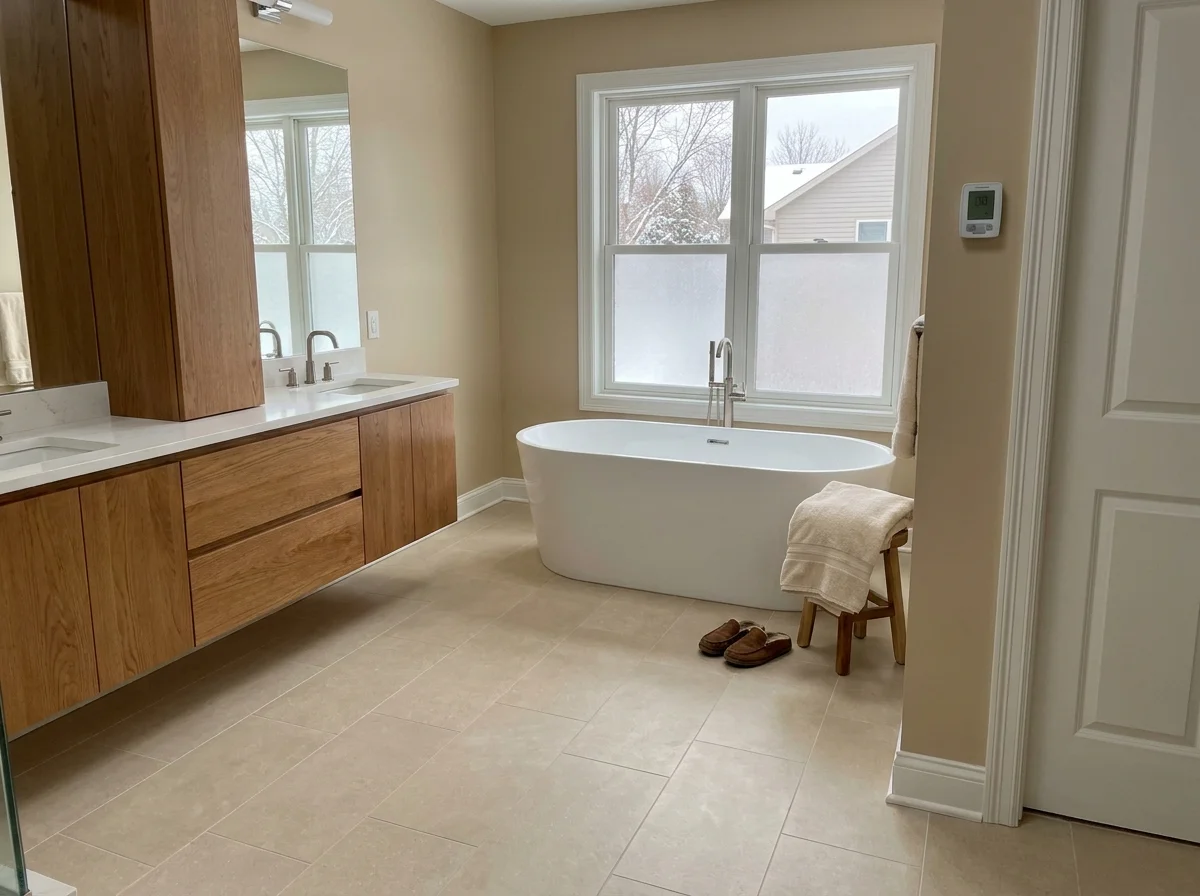
There is one complaint about tile floors that we hear every winter, and it is always delivered the same way: with a wince and a description of the first step out of the shower. Tile is a wonderful floor. It is waterproof, it is nearly impossible to wear out, and it comes in every color and texture stone has ever had. It is also a very good conductor, which means it pulls heat out of bare feet faster than wood or carpet does. For a long time the answer was a bath mat. The better answer is to warm the floor itself, and to do it while choosing a tile that makes the most of the room.
Large-format porcelain with heat beneath: the slippers stay where they are
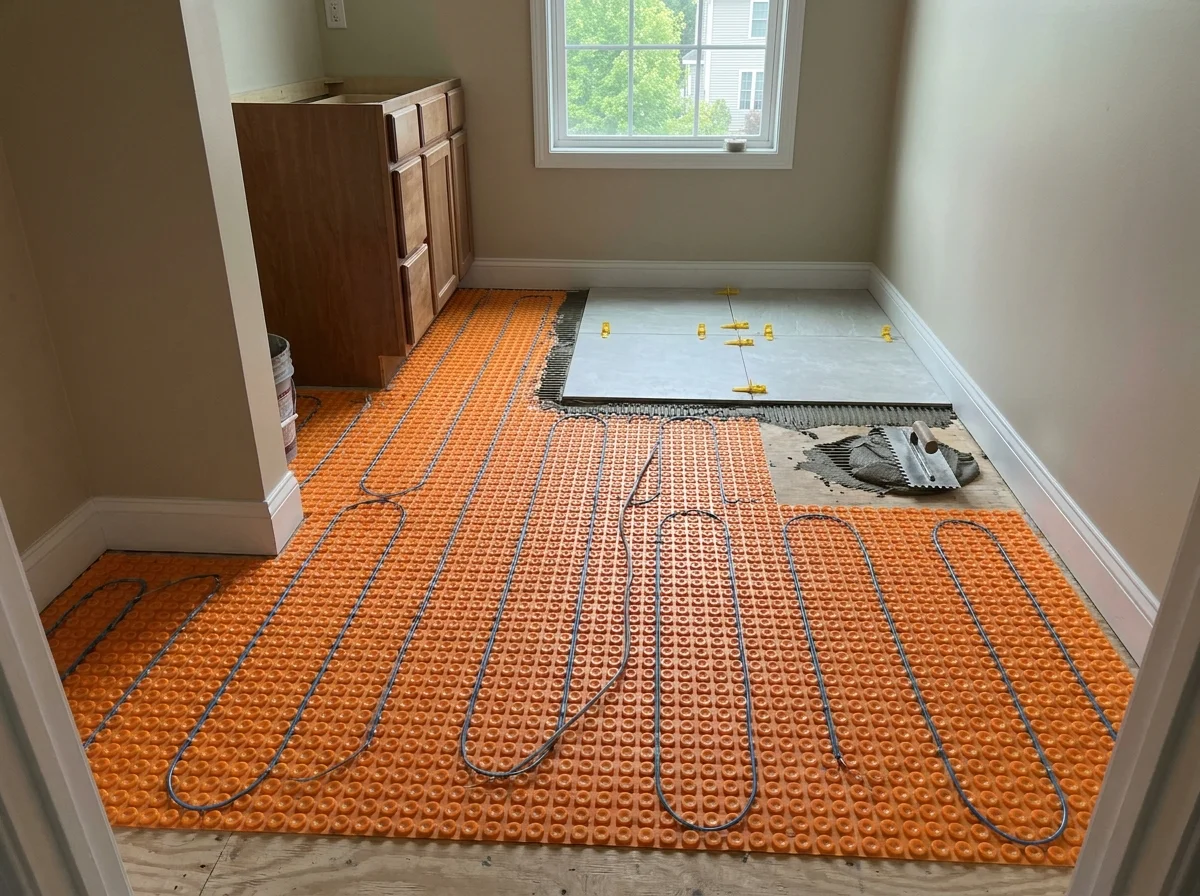
The heat goes in before the tile: a cable in a membrane, then mortar, then tile
How Heat Gets Under a Tile Floor
The system we install most often is electric. A thin heating cable is laid across the floor in even loops, either woven into a mat or pressed into a studded membrane, and then buried in the mortar that sets the tile. A sensor sits in the floor between two runs of cable and reports to a wall thermostat. The whole assembly adds very little height, which matters where the tile has to meet a hallway floor.
What surprises people is how it feels. A heated floor does not blast warm air. The tile simply stops being cold, and the room feels comfortable at a lower air temperature because the warmth starts at your feet. On a programmable thermostat, it comes on before you wake up and backs off after you leave, so it runs only when someone will feel it.
There are things to plan for. The heating system needs its own electrical circuit, and the thermostat location is decided before the walls are closed. Cable is not placed under the vanity, the toilet, or a built-in tub, since heat trapped under those does nothing useful. And the floor has to be tested before, during, and after the tile is set, because once tile is down, the cable is not accessible. This is an installation to do carefully once.
Why the Tiles Got So Big
The tile we specify most often now is large-format porcelain: tiles a couple of feet long or longer on a side. The appeal is mostly about what is missing. Fewer tiles means fewer grout lines, and grout lines are what make a floor look busy and what take the effort to keep clean. A small bathroom floored in large tile reads as one calm surface, and the room feels bigger for it.
Porcelain earns its place for practical reasons too. It is dense, it absorbs almost no water, and it needs no sealing. Modern printing makes a convincing limestone, marble, slate, or concrete look in a material that shrugs off the salt and slush that a mudroom floor sees from December through March. Where a client wants the real thing, we install natural stone as well, with an honest conversation about sealing and care. For floors that take a beating, porcelain is hard to argue with. If you are weighing it against other materials for the main living areas, our hardwood and luxury vinyl guide covers that side.
Large Tile Is Less Forgiving
Bigger tile demands a flatter floor. A small tile follows a gentle dip without anyone noticing. A long tile bridges it, leaving a hollow underneath or an edge standing proud of its neighbor, which you will feel with every step and see whenever light rakes across it. So the real work of a large-format floor happens before the first tile is set: checking the subfloor for movement, stiffening it where it flexes, and leveling it. We also use a membrane between the subfloor and the tile so small seasonal movement in the house does not travel up into the tile as a crack. None of that shows in the finished room, and all of it decides how the floor looks in ten years.
Layout matters more with large tile, too. Long rectangular tiles are set with a one-third offset rather than a half offset, because long tiles are very slightly crowned and a half offset puts the high point of one next to the low point of the next. We plan the layout from the doorway, so the cuts fall at the edges of the room and the full tiles land where your eye goes first.
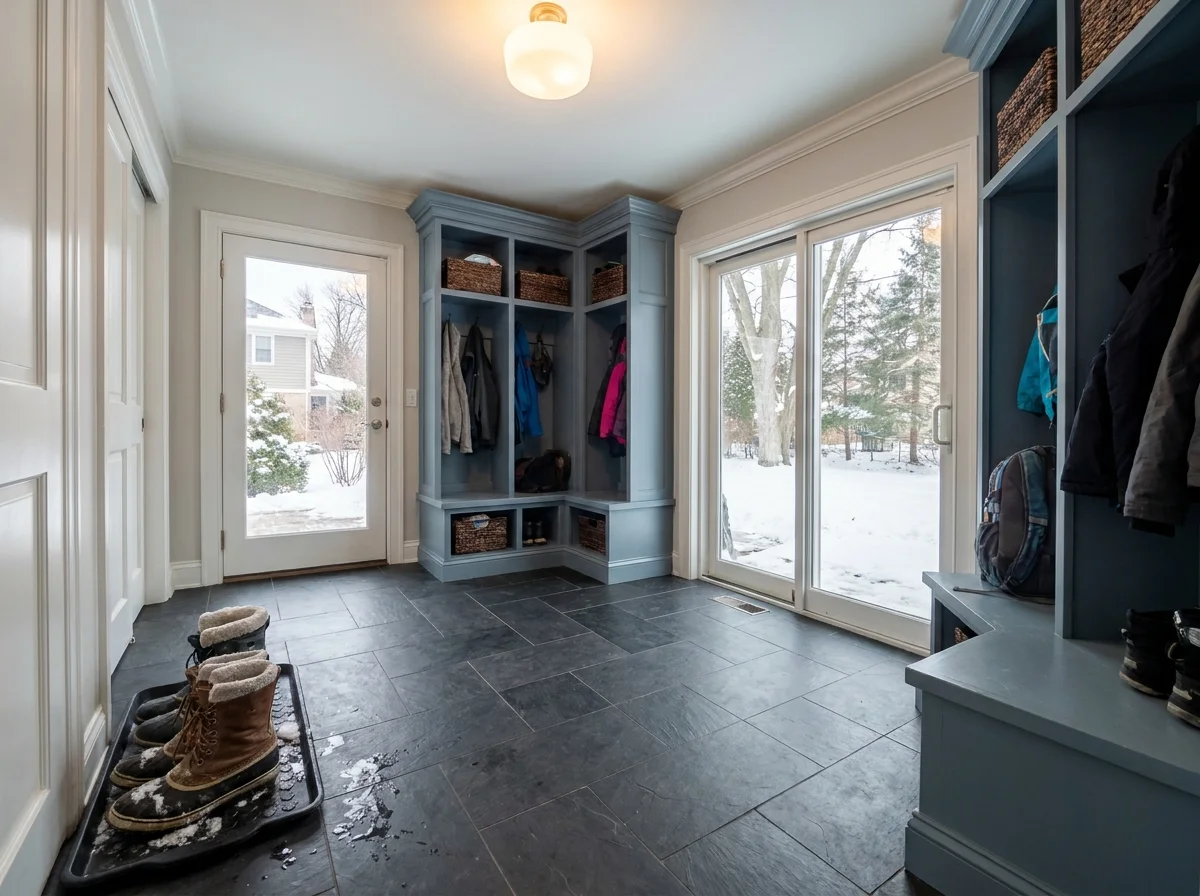
Slate-look porcelain in a mudroom handles salt, slush, and wet boots
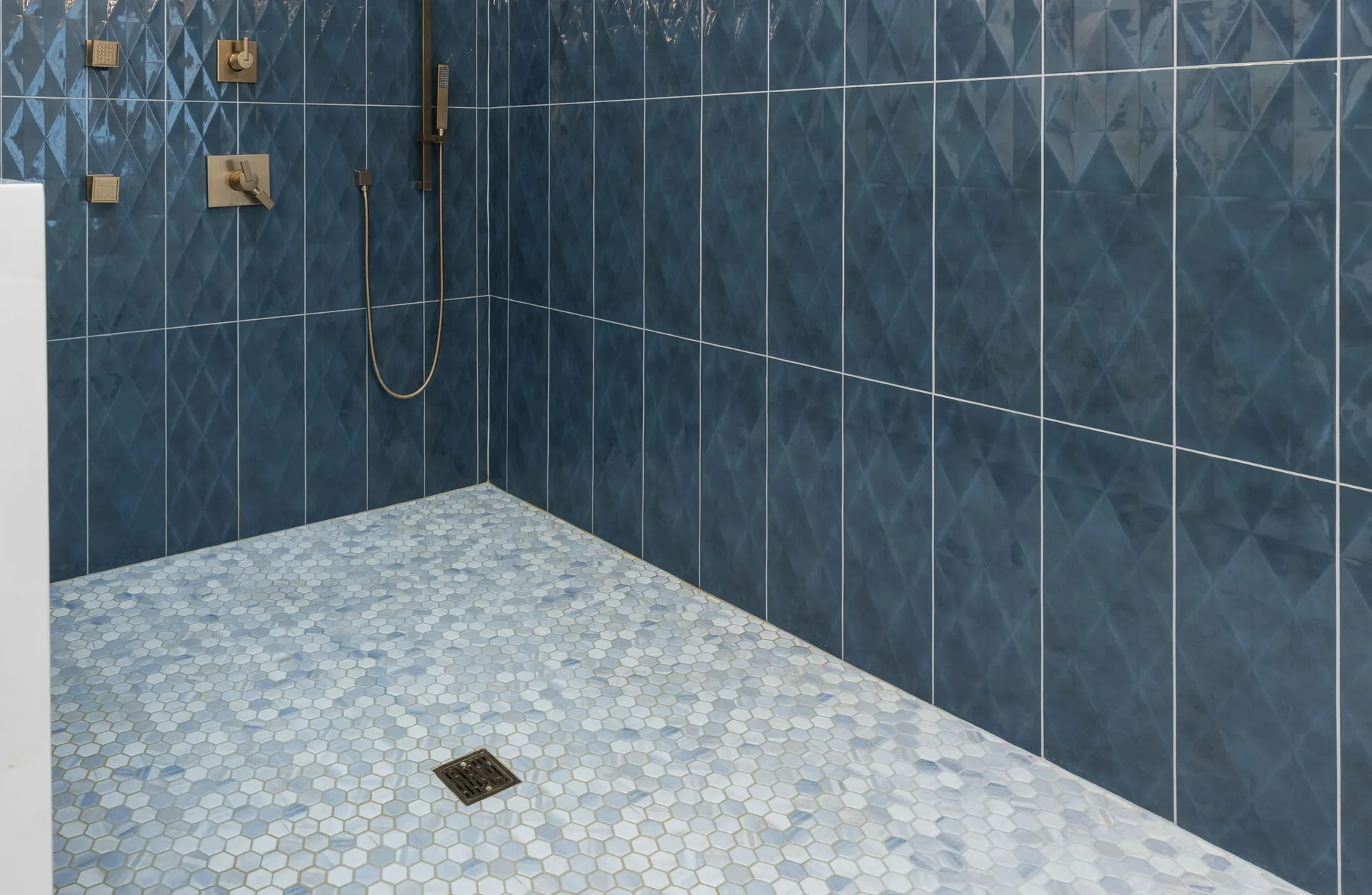
Shower floors go the other way: small mosaic for slope and grip
Where Small Tile Still Wins
A shower floor has to slope to the drain from every direction, and small tile follows that slope where a large tile cannot. The extra grout lines also give wet feet something to grip. That is why you will often see us pair a large-format bathroom floor with a mosaic in the shower, as in the photo above. A linear drain changes the math, because the floor then slopes in a single plane and large tile can run straight through into a curbless shower. That is a detail we use often in bathrooms designed for the long term. Our post on bathroom tile patterns covers the mosaic side of the family.
Where Heated Tile Makes the Most Sense
Primary and hall bathrooms. The obvious one, and the room where bare feet meet tile every single day.
Mudrooms and entries. A warm floor dries wet boots and melts the snow that comes in on them, which keeps the whole drop zone cleaner.
Basement bathrooms. Tile over a concrete slab is the coldest floor in the house. Heat changes how much the room gets used.
Kitchens. Less common, but worth considering in a kitchen over a crawl space or an unheated garage, where the floor never quite warms up.
Decide Early
Floor heat cannot be added after the tile is down. It has to be in the plan before the tile is ordered, along with the circuit and the thermostat location. If a bathroom or mudroom is on your list for this winter, this is one of the first questions to answer.
Olive + Baxter is a design and build studio in Naperville with a showroom at 535 S Washington St, Suite 7. We design, supply, and install tile floors with our own team, from subfloor preparation through the final grout joint. Explore our Tile Flooring services or contact us to talk through your project.