Carpet Isn't Dead: Where It Still Beats Hardwood
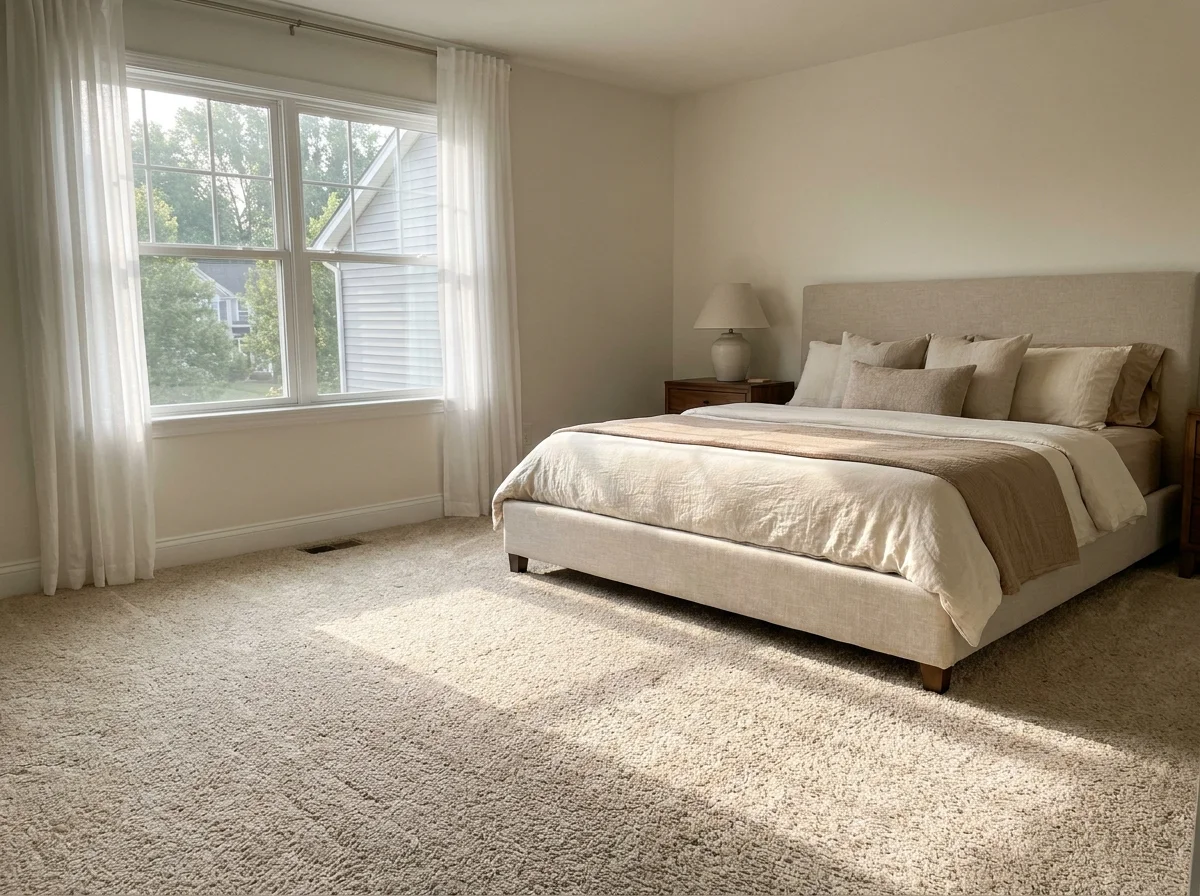
For about twenty years the advice has been the same: pull up the carpet, there is hardwood underneath. Often that was good advice, and we refinish a great many floors that spent decades hidden. But somewhere along the way the idea hardened into a rule that carpet is always the lesser choice, and that is not true. There are rooms where hard flooring is the compromise and carpet is the upgrade. If you have ever stepped out of bed onto a cold floor in January, or listened to a teenager cross the room above the kitchen, you already understand the argument.
Wall-to-wall carpet makes a bedroom quiet and warm
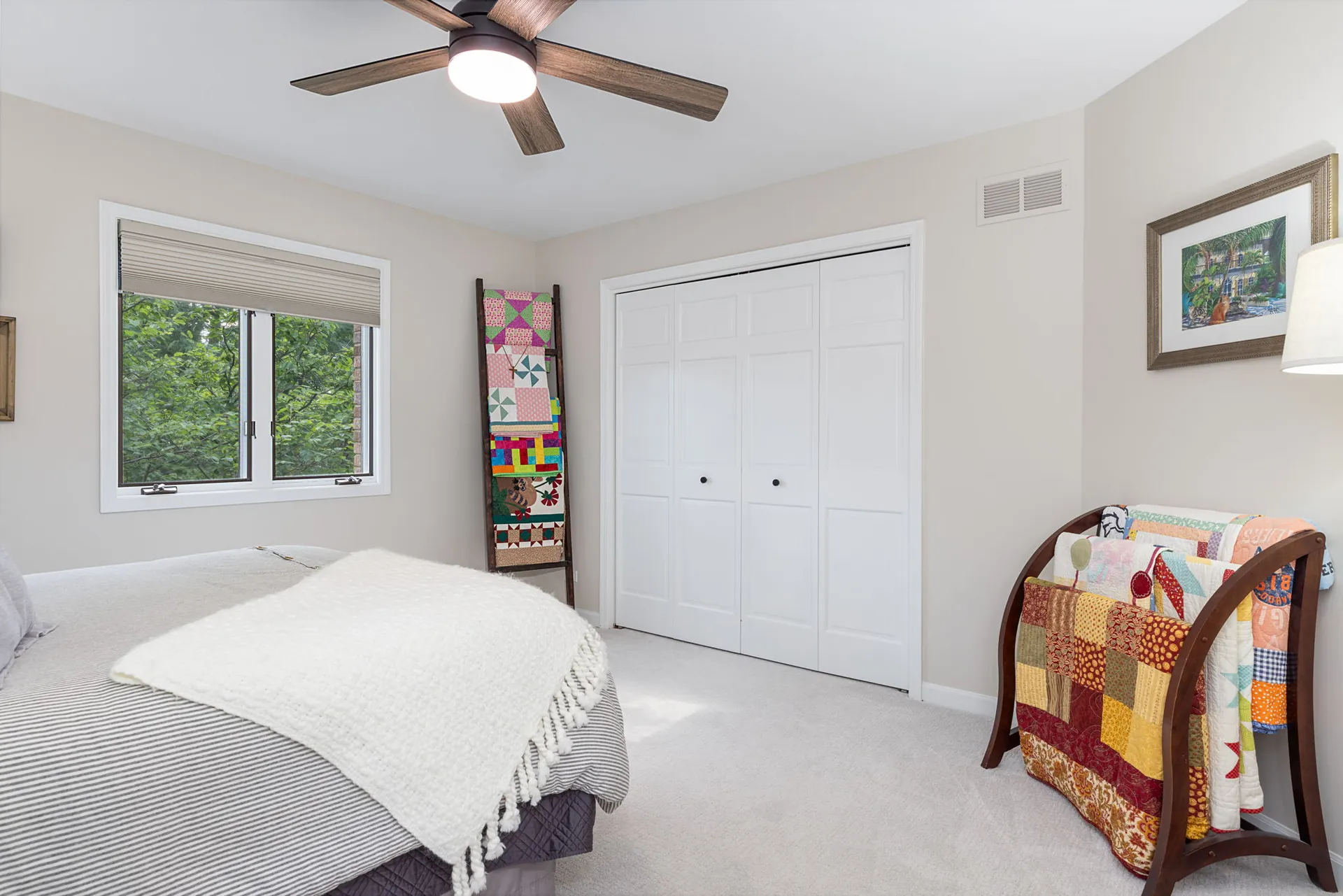
A guest bedroom from one of our Naperville projects
Bedrooms
The bedroom is where carpet makes its strongest case. You are barefoot there more than anywhere else in the house. The room sees little traffic and almost no spills, so the usual objections do not apply. And carpet absorbs sound in a way no hard floor can, which matters in a two-story house where the primary bedroom sits over the family room or the kids' rooms sit over the kitchen. Many of our clients put hardwood through the main floor and carpet upstairs, and it is a division that makes sense.
Basements
A basement floor is a concrete slab, and concrete is cold and hard. Carpet over a good pad is the fastest way to make a lower level feel like part of the house instead of a room beneath it, especially in a media room, where it also improves the sound, or in a playroom, where children spend their time on the floor. The condition is that the basement has to be dry. We look at the moisture history first, and where it is appropriate we use a synthetic carpet and a pad designed for below-grade rooms. A basement that takes on water needs that solved before any floor goes down. Our post on finishing a basement covers the rest of the room.
Stairs
Stairs are where carpet is a safety feature. Bare wood treads are slippery in socks and loud under every footstep. A fully carpeted stair, or a runner over wood treads, gives grip and softens a fall. A runner in particular lets you keep the wood visible at the edges while getting the benefits where your feet land. We wrote a full guide to custom stair runners for anyone weighing that choice.
Where We Would Not Use It
To be fair to hardwood: kitchens, bathrooms, mudrooms, and entries are not carpet rooms, and neither is a dining room where food reaches the floor. In main living areas, most clients are happiest with hardwood or luxury vinyl and a large area rug, which gives softness where the furniture sits and a floor that can be swept everywhere else. And if anyone in the house has significant allergies, that belongs in the conversation before any carpet is ordered.
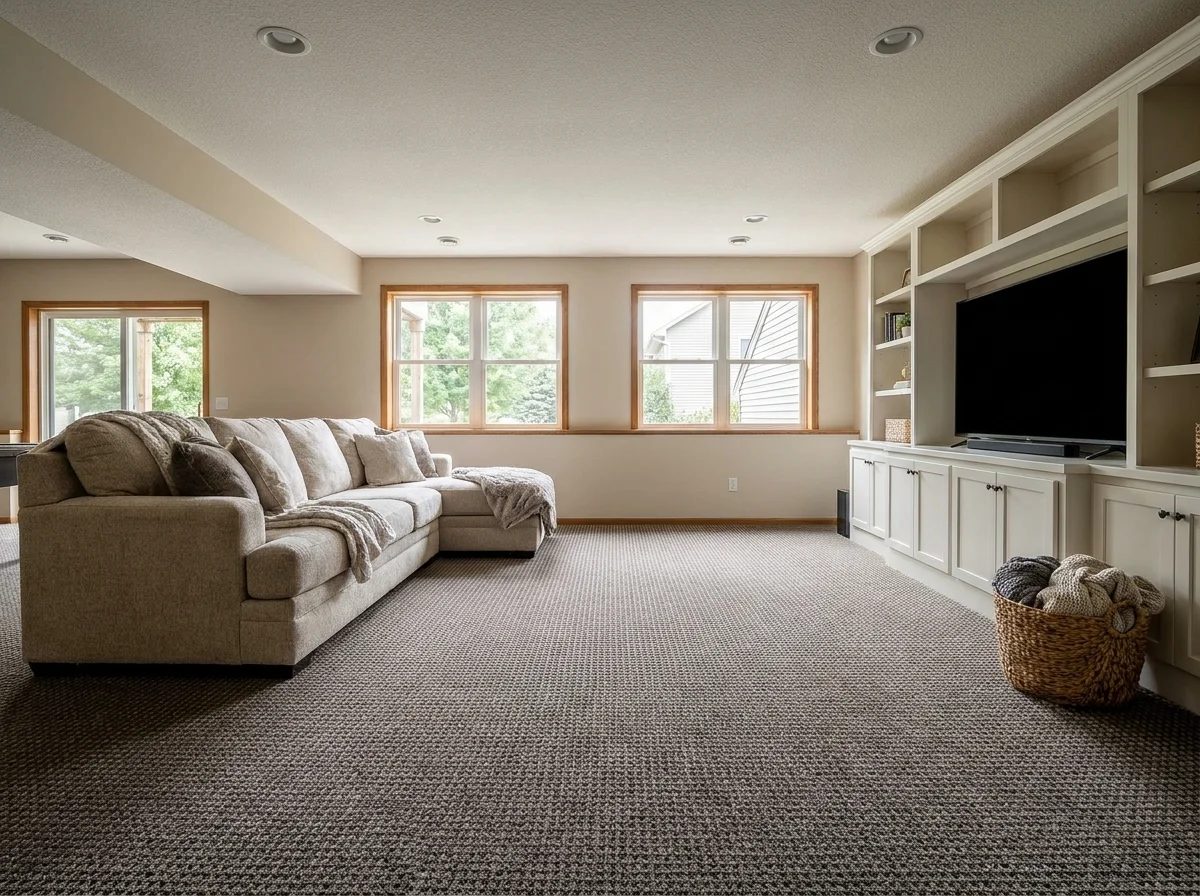
A small-scale pattern hides traffic in a hard-working basement
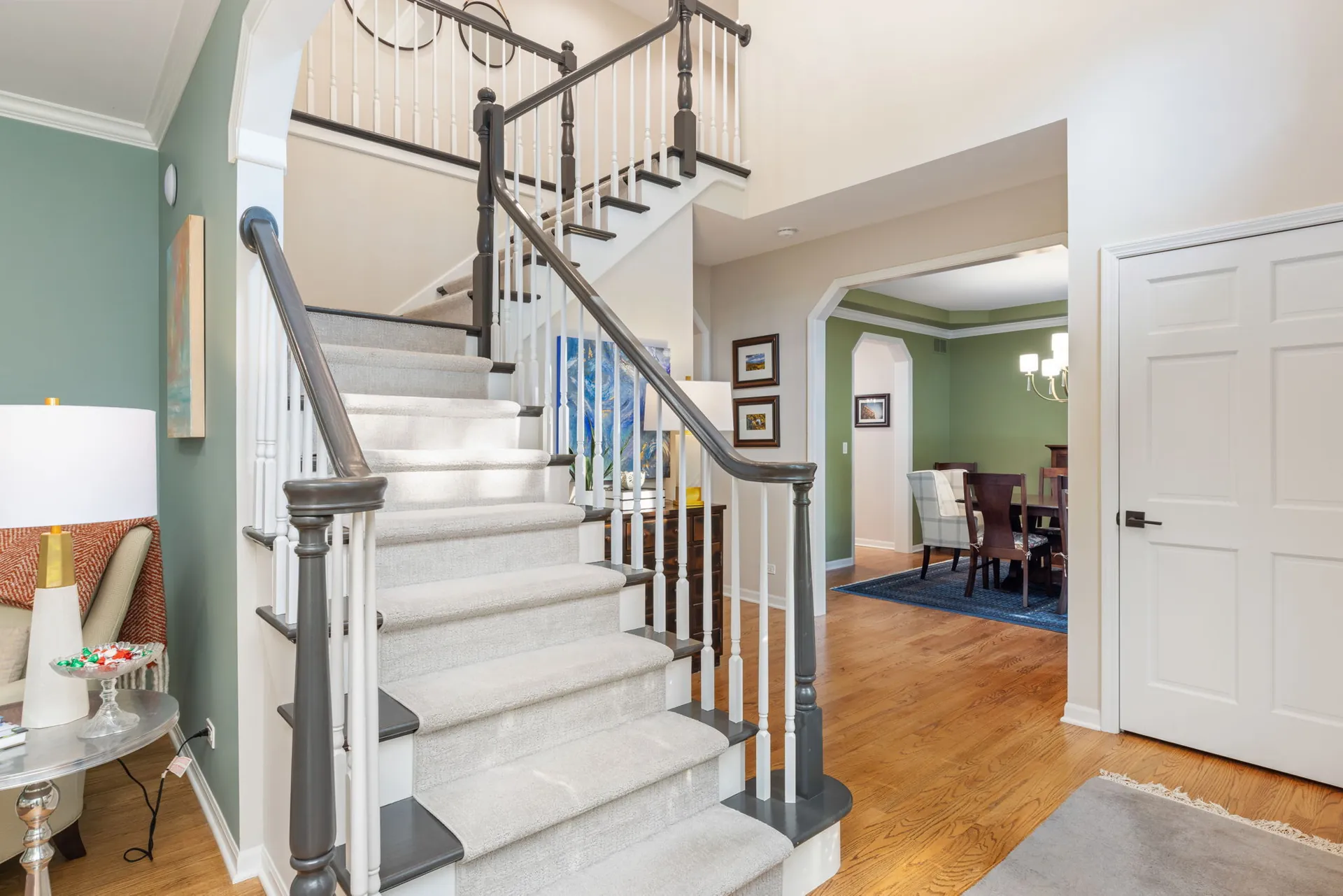
A runner keeps the wood visible and the footing sure
Wool or Nylon
Most of the carpet we install is one of two fibers. Wool is the natural choice and the one designers reach for first. It has a depth of color and a matte, soft look that synthetics imitate but do not quite match. It is naturally resilient, so it springs back underfoot for years, and it hides soil well. It costs more, and it wants a little more care with certain spills.
Nylon is the workhorse. It is the most durable of the synthetic fibers, it resists crushing in traffic lanes, and when the color is built into the fiber itself, known as solution-dyed, it is very hard to stain or fade. For a busy family room, a basement, or a house with pets and young children, a good nylon is often the practical answer. Polyester and similar fibers are softer in the hand and resist stains well, but they tend to flatten sooner under heavy traffic, so we keep them for rooms that see less of it.
Construction Matters More Than Fiber
How a carpet is made tells you more about how it will wear than what it is made of. Cut pile, where the yarn ends stand upright, is the soft, classic bedroom carpet. Loop pile leaves the yarn uncut, which makes a lower, tougher surface that resists crushing. Combinations of the two create patterns you can see and feel.
The test we use in the showroom is density. Bend a sample back on itself. If you can easily see the backing between the tufts, the carpet will mat down in the places you walk. A dense, tightly twisted, lower pile will outlast a tall, loose, plush one every time, even though the plush one feels more luxurious for the first thirty seconds. One caution for pet owners: claws can catch in looped carpet, so a dense cut pile is the safer choice with cats and dogs.
Pattern Is Back
The wall-to-wall beige of the 1990s is what gave carpet its reputation. What we install now looks different: tone-on-tone geometrics, small-scale trellis and herringbone weaves, textured loops, and flat-woven wools. Pattern does practical work as well, because it disguises footprints, vacuum marks, and the traffic path from the door to the bed. We choose it the way we choose wallpaper: scaled to the room and coordinated with the walls and fabrics.
The Pad and the Installation
The pad under a carpet affects how it feels, how quiet it is, and how long it lasts, and it is the first place a low bid cuts corners. Thicker is not better. A firm, dense pad of the right thickness for that particular carpet supports the backing, while a pad that is too soft lets the carpet flex and wear out early.
Installation is the other half. Carpet has to be power stretched across the room, not simply kicked into place, or it will loosen and ripple within a few years. Seams should be planned so they fall away from the main sightlines and run with the light from the windows where possible. Patterned carpet has to be matched at every seam and kept straight to the walls, which takes time and a careful installer. On stairs, each tread is fitted and secured individually.
Olive + Baxter is a design and build studio in Naperville with a showroom at 535 S Washington St, Suite 7. We carry carpet samples in wool, nylon, and patterned constructions and can bring them to your home to see against your walls and your light. Explore our Carpet services or contact us to get started.