Wallpaper Is Back: Here's Where It Actually Works
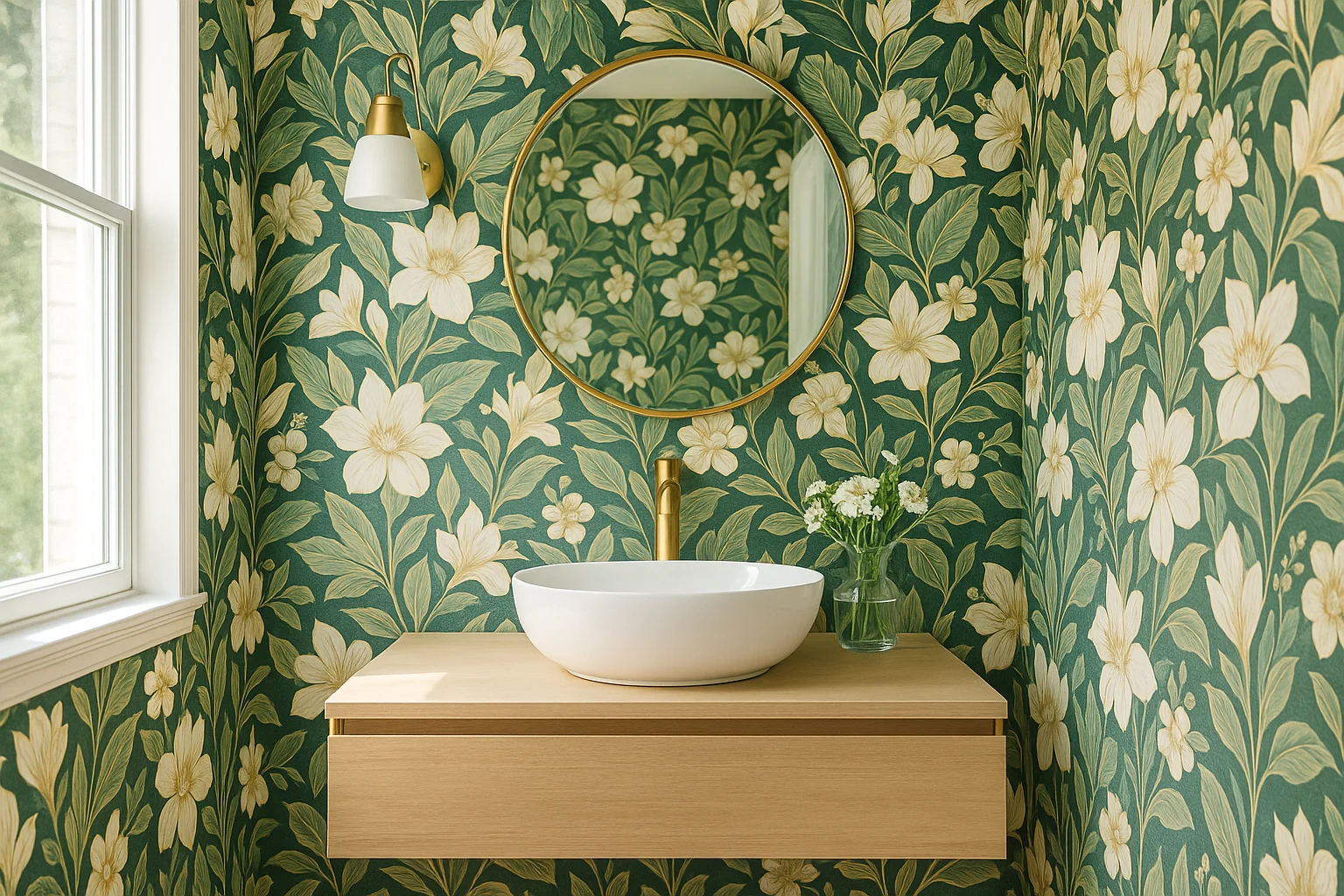
For years, wallpaper was a four-letter word in remodeling, something to be steamed off, not put up. That era is over. The wallpaper coming through our studio now is sophisticated, removable, and doing things paint simply can't: adding texture, depth, and a sense that a room was truly designed rather than just decorated. But like any strong tool, it belongs in some places and not others. Here's how we use it.
Start in the Powder Room
If you're wallpaper-curious, the powder room is the perfect place to start. It's small, so even a premium paper stays affordable. It's a room guests notice. And because there's no shower steam to fight, it's a low-risk environment for paper. Best of all, a powder room is where you can be brave, a dramatic dark botanical or a saturated pattern that might overwhelm a larger space feels intentional and jewel-box-luxurious in a small one. It's the single highest-impact square footage of wallpaper in the house.
Look Up: The Ceiling as a Fifth Wall
The most underused surface in any room is the ceiling, and wallpaper is one of the most elegant ways to use it. A subtle patterned paper overhead, in a study, a powder room, a bedroom, or inside a tray, turns a flat white plane into a quiet surprise that guests feel before they consciously notice it. We usually keep ceiling paper softer in scale and contrast than a feature wall, framed by crisp white crown molding, so it reads as refined rather than busy. It's the same instinct behind the architectural ceiling moments we wrote about in our tray ceiling post.
Texture Over Pattern: Grasscloth and Naturals
Not all wallpaper is about pattern. Some of our favorite installations are natural materials, grasscloth, raffia, paperweave, that bring warmth and tactile texture to a wall while reading as a quiet neutral from across the room. Grasscloth is especially good in dining rooms, studies, and entries, where it gives a layered, collected feeling that flat paint can't replicate. It's the warm, organic cousin of the color-drenched look we love in lower-light rooms like the finished basements we design.
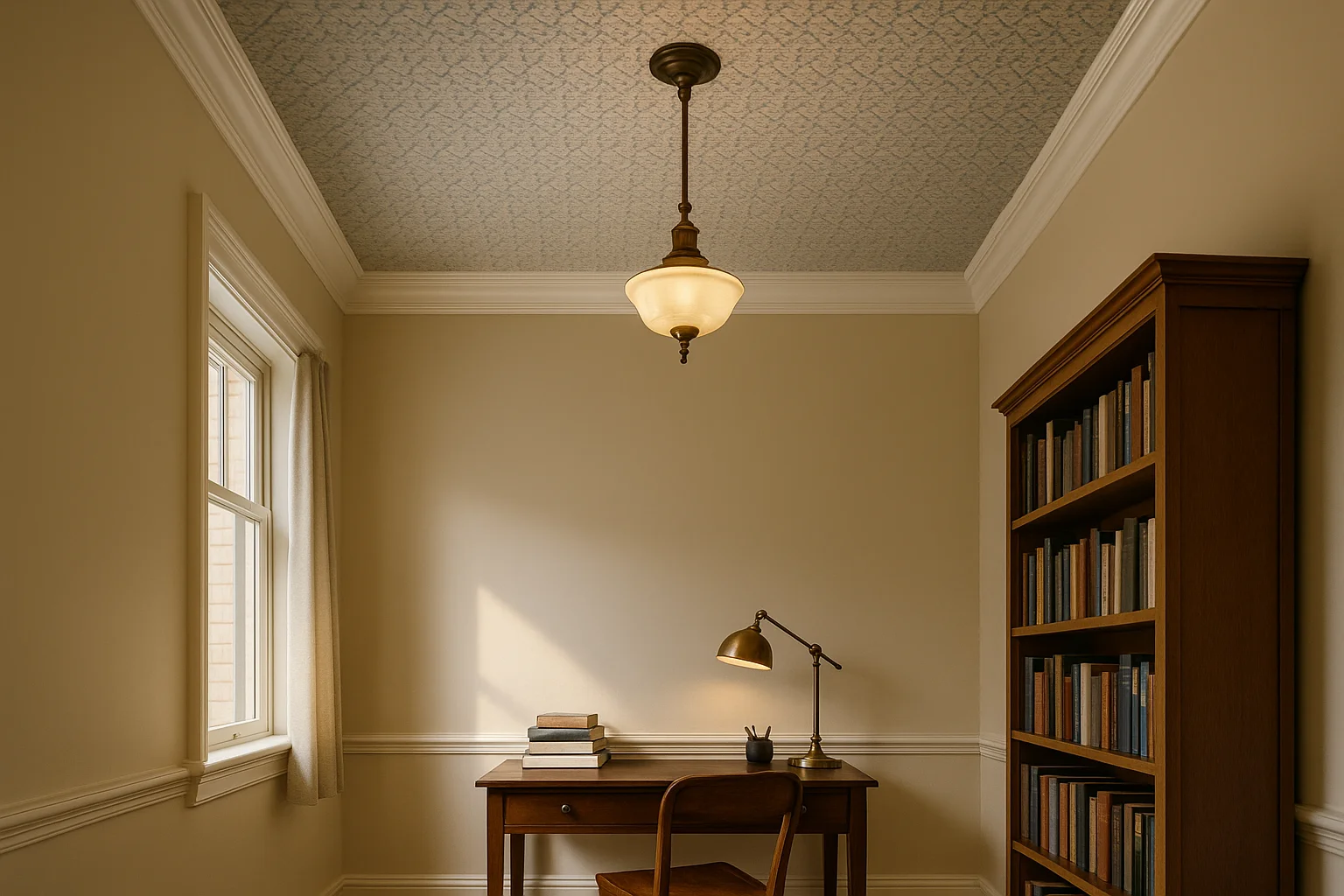
A papered ceiling: the fifth wall
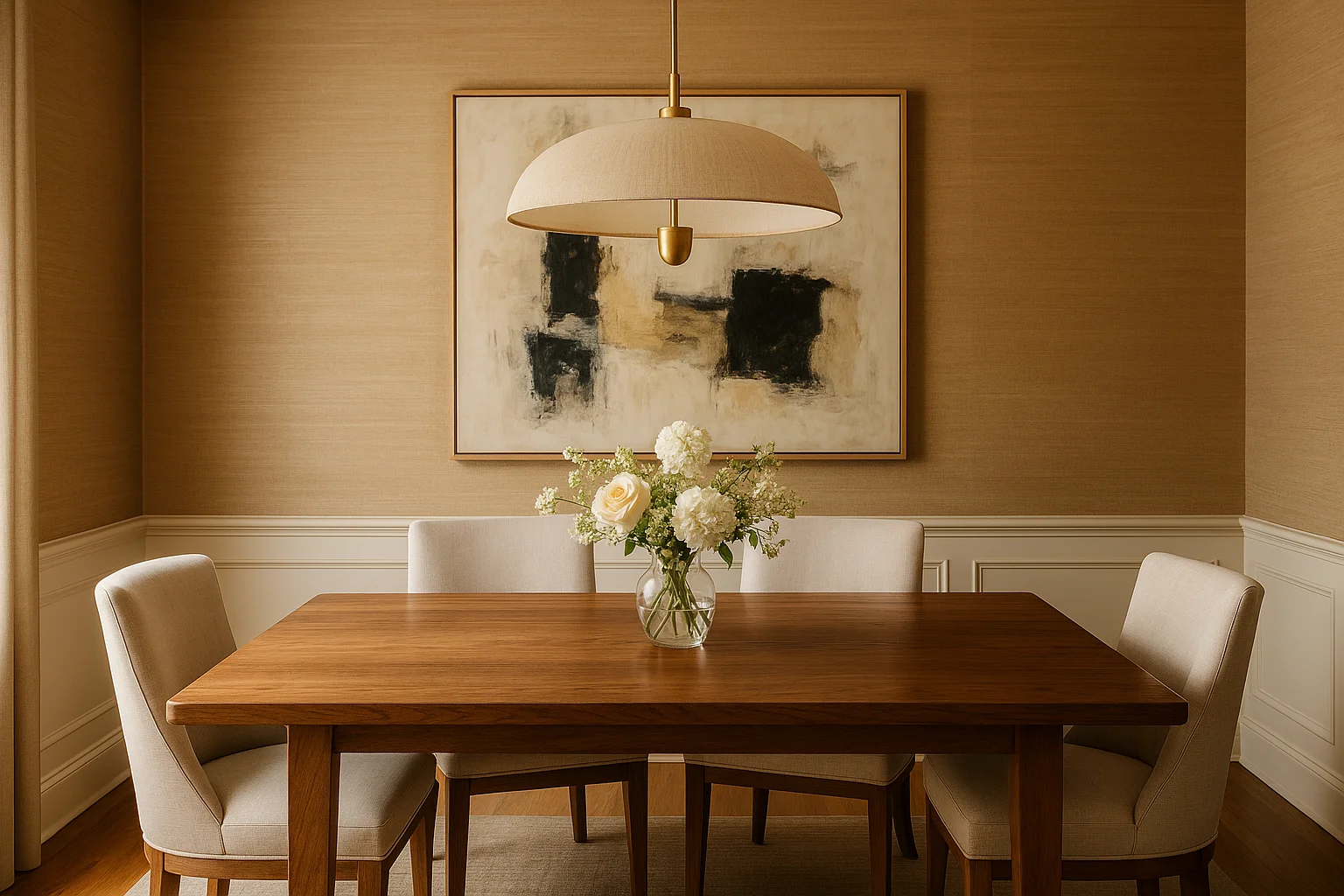
Grasscloth adds texture without pattern
Where We Tell Clients to Wait
Wallpaper isn't right everywhere. Inside a shower or directly over a tub, steam and standing humidity will eventually defeat even moisture-rated papers, so we keep paper out of true wet zones and let tile do that work. Very large, uninterrupted walls can also make a bold pattern feel relentless, sometimes the better move is a single feature wall, or carrying the paper only above a chair rail. And in a home being prepped for sale, we usually steer toward broadly appealing textures and neutrals rather than a polarizing print, for the same reasons we lay out in our post on paint colors that sell homes.
Paper, Paste, and Prep
The difference between wallpaper that looks custom and wallpaper that looks like a weekend project is almost entirely in the prep and the hang. Walls need to be smooth, primed, and patient, pattern repeats have to be matched seam to seam, corners have to be planned, and outlets have to disappear into the design. Peel-and-stick papers have come a long way and are genuinely good for a renter or a quick refresh, but for a permanent, seamless result in a forever home, traditional paste-the-wall installation by an experienced hanger is still worth it. This is precisely the kind of detail that benefits from professional installation.
Olive + Baxter handles wallpaper as part of our full wall-finishes service, color and pattern selection in your home with large-format samples, wall prep, and professional installation by a crew that hangs paper for a living. As a design + build firm serving Naperville and the western suburbs, the designer who helps you choose the paper works alongside the team that hangs it. Explore our Wallpaper services or contact us to plan your first wallpaper moment.