Reface, Repaint, or Replace? Three Tiers of Kitchen Cabinet Remodels
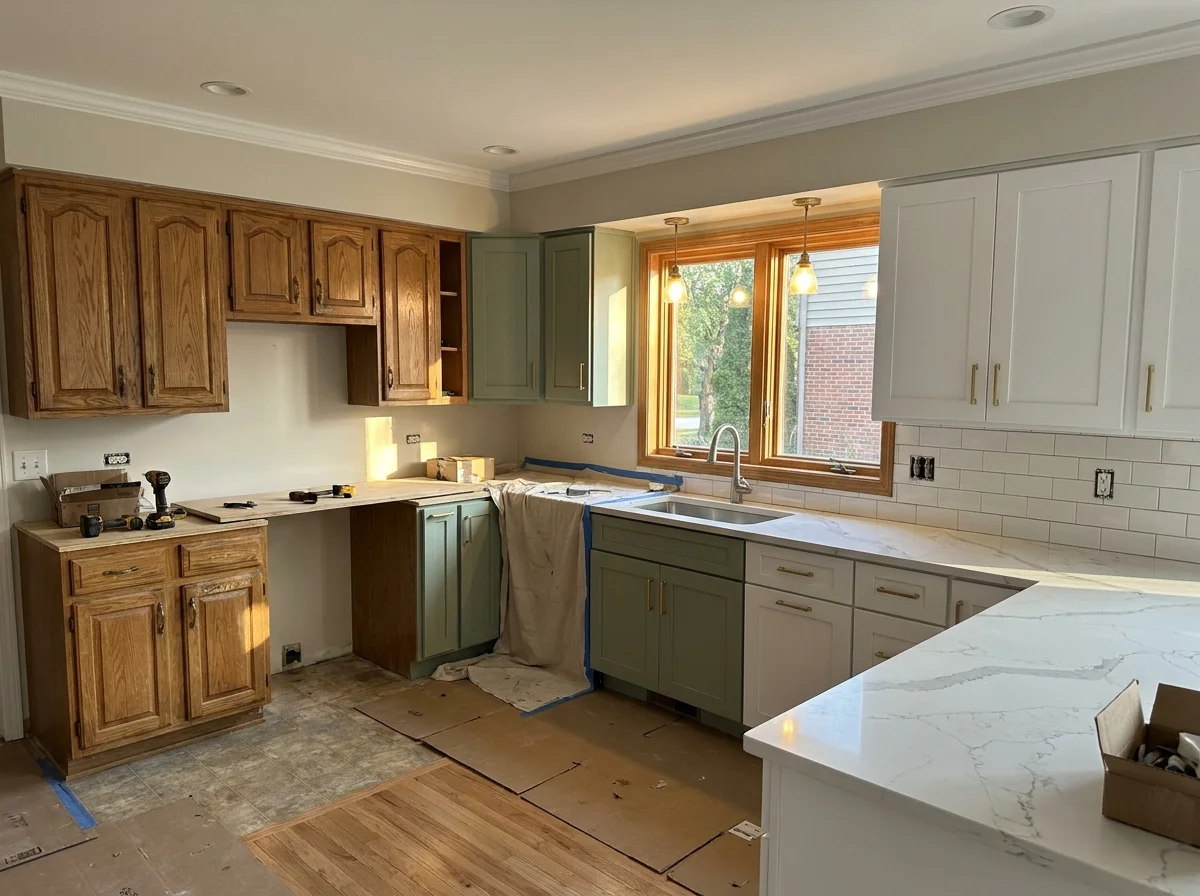
When a client says they want new cabinets, the first thing we do is ask what is actually wrong with the old ones. Sometimes the answer is everything: the layout is cramped, the boxes are particleboard that has swollen at the sink base, and the doors have not closed straight since the Clinton administration. But often the answer is narrower. The color is dated. The doors are oak and the client wants shaker. The cabinets are fine and the kitchen is not. Those are different problems, and they have different price tags. There are three tiers of cabinet remodel, and the right one depends on the boxes you have, the layout you want, and how long you plan to stay.
Original oak, repainted, and replaced: three budgets on one wall
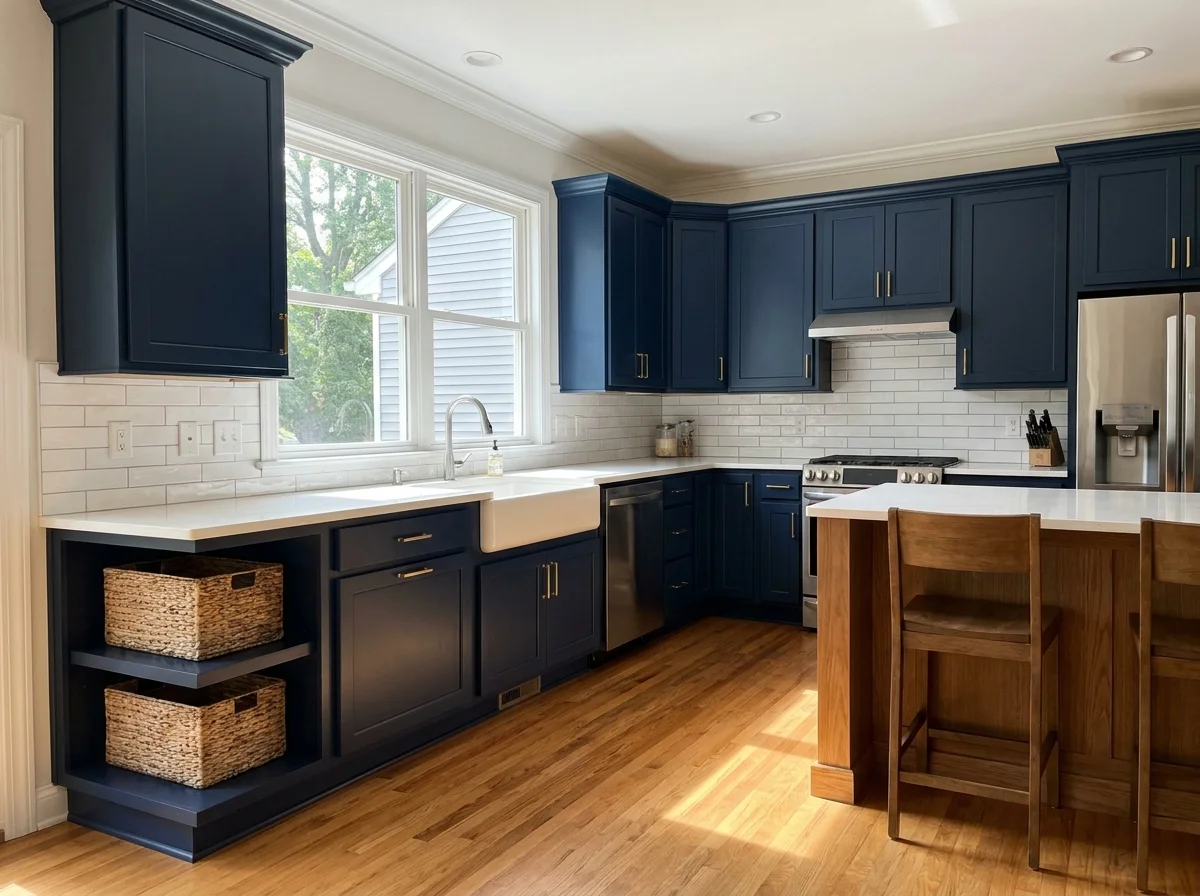
A sprayed navy finish on existing doors transforms a kitchen for a fraction of replacement
Tier One: Repaint
Professional cabinet painting is the least expensive tier and the most misunderstood. Done properly, it means removing every door and drawer front, cleaning and degreasing, sanding, priming with a bonding primer, and spraying two or more coats of a catalyzed or urethane-modified enamel in a controlled environment, then reinstalling with new hardware. Done improperly, it means a roller, a weekend, and chipping within a year. The gap between those two is the entire value of the tier.
Repainting works when the doors are a style you like, or at least a style you can live with, and the boxes are solid. Shaker and flat-panel doors take paint beautifully. Raised-panel oak can be painted, but the grain telegraphs through unless it is filled first, which adds labor and cost. Thermofoil and laminate doors generally should not be painted at all. We also add soft-close hinges and new pulls at this tier, because hardware is the cheapest upgrade in the kitchen and the one people notice most. For color direction, our post on why we keep painting vanities navy, green, and olive applies just as well to a kitchen island.
What repainting cannot fix: layout, storage, door style, or boxes that are failing. If any of those is your real complaint, paint is a delay, not a solution.
Tier Two: Reface
Refacing keeps your existing cabinet boxes and replaces everything you see. New doors and drawer fronts in the style and finish you choose, matching veneer or laminate applied to the exposed face frames and end panels, new hinges, new hardware, and often new drawer boxes with full-extension glides. From inside the room, a well-refaced kitchen is indistinguishable from a new one. The boxes never move.
This is the tier for kitchens where the layout already works and the boxes are plywood or well-built particleboard that has stayed dry. It is also the tier where door style changes are possible: oak raised panel to painted shaker, for instance, which is the single most common request we hear. Refacing typically costs about half of full replacement. That number varies with the door material and how much veneer work the face frames need, but the ratio holds. Our guide to shaker, slab, and raised panel doors covers the style decision in depth.
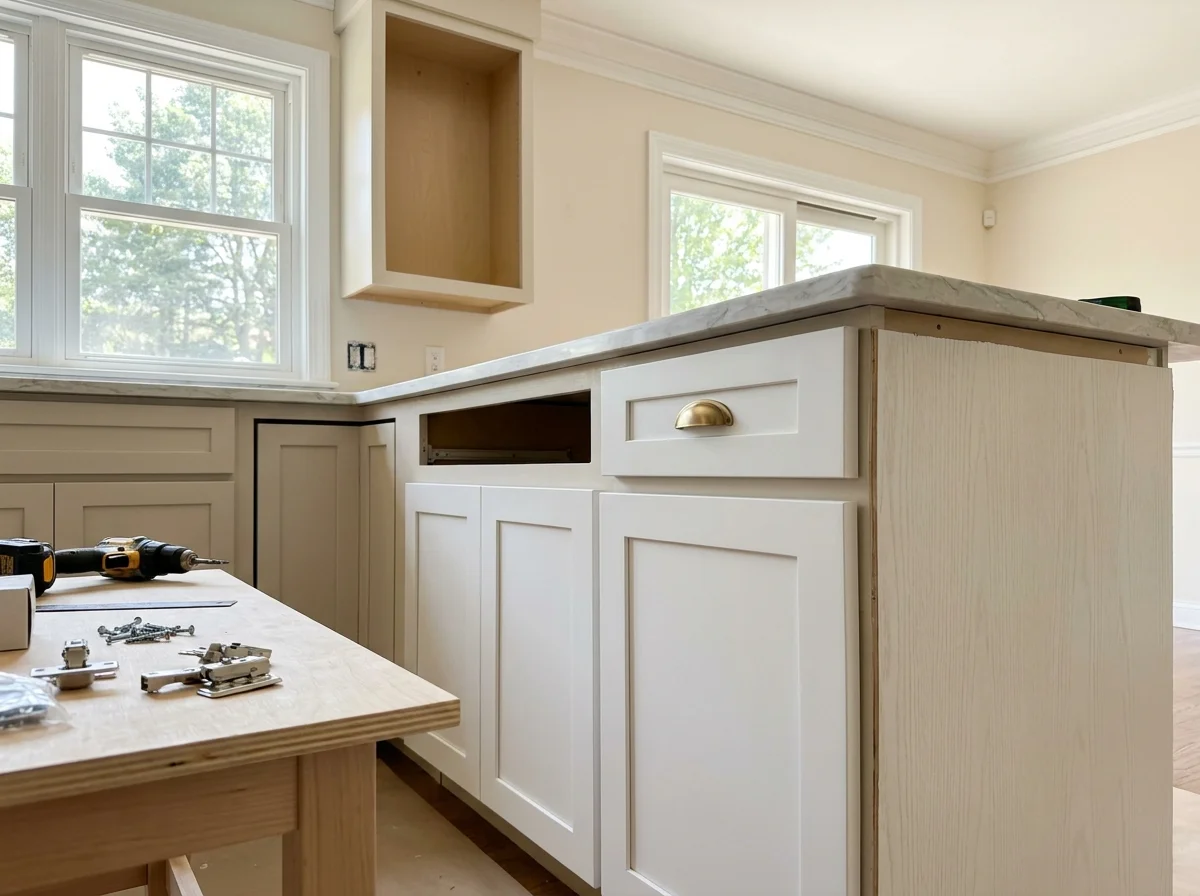
Refacing: new fronts, new veneer, same boxes
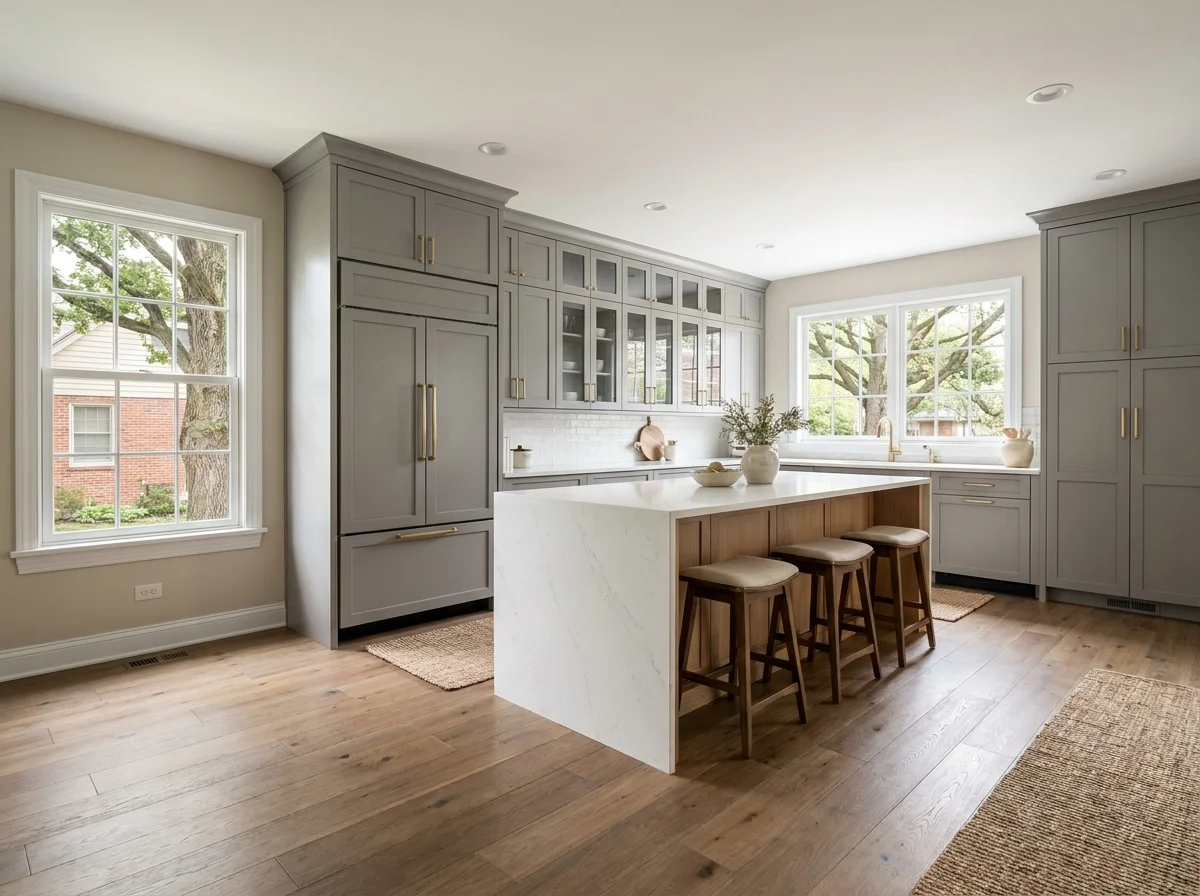
Full replacement is the only tier that changes the layout
Refacing has limits. You are locked into the current box sizes and positions, which means the same number of drawers, the same awkward corner, and the same 30-inch uppers if that is what you have. Adding a pantry pull-out or a trash cabinet is sometimes possible by swapping one box, but the room stays the room. And if a sink base has swelled from a slow leak, it needs to be replaced regardless, which starts to erode the savings.
Tier Three: Replace
Full replacement is the only tier that lets you redesign the kitchen. New boxes mean a new layout: a bigger island, uppers that run to the ceiling, deep drawer bases instead of doors and shelves, a proper pantry wall, an appliance garage, a beverage station. It is also the only option when the existing boxes are failing, when you want to move the sink or range, or when the kitchen is part of a larger project that opens a wall. Almost every kitchen in our whole-home remodel case study was a replacement, because the layouts were changing.
Within replacement there is a second ladder: stock, semi-custom, and custom. Stock cabinetry comes in fixed sizes and a limited palette, and it is what most big-box kitchens are built from. Semi-custom is what we specify most often: standard box construction with plywood sides, dovetail drawers, and soft-close everything, but with modifications to size, depth, and finish that let the design fit the room. Fully custom is built to the inch and finished in any color, at a price and lead time to match. For most Naperville homes, semi-custom delivers ninety percent of custom for a substantially lower number.
Replacement also triggers the rest of the kitchen. New boxes almost always mean new countertops, because the old stone will not fit the new footprint, which pulls in the countertop decision and usually new backsplash tile and flooring. That cascade is why full replacement costs what it does, and it is why we walk clients through it honestly before anyone falls in love with a rendering.
How to Tell Which Tier You Are In
Ask three questions. Do you like where everything is? If the layout works and you would keep it in a brand new kitchen, you are in tier one or two. Are the boxes sound? Open the sink base and press on the floor of it; look for swelling, water stains, or delamination at the bottom edges. If the boxes are solid, refacing is on the table. If not, replace. Do you want a different door style? If the doors are the problem and the boxes are fine, reface. If the doors are fine and the color is the problem, repaint.
Then think about horizon. A repaint is a five-to-ten-year decision and a great fit for a home you plan to sell in that window. A reface should last as long as the boxes underneath it, often fifteen years or more. A replacement is a twenty-five-year decision and should be designed like one. Our list of kitchen remodel mistakes starts with people choosing a tier based on budget alone rather than on what the kitchen actually needs.
Olive + Baxter is a design and build studio in Naperville with a cabinetry showroom at 535 S Washington St, Suite 7, where you can see door styles, finishes, and box construction in person before deciding on a tier. Explore our Cabinetry services or contact us to talk through which option fits your kitchen and your timeline.