Quartz, Quartzite, Marble, or Granite? Choosing the Right Countertop for Your Kitchen

No surface in your home works harder than a kitchen countertop, and no remodel decision generates more questions in our design studio. Quartz, quartzite, marble, and granite get discussed as if they're variations on one theme, but they live very differently, in maintenance, in durability, and in how they look ten years in. Here's the honest comparison we walk through with every kitchen client, illustrated with slabs from our own surfaces collection.
Quartz: Engineered for Real Life
Quartz countertops are engineered stone, ground natural quartz bound with resin, and that engineering is the point. The surface is non-porous, so it never needs sealing, shrugs off coffee and red wine, and delivers pattern consistency a quarry can't promise: the slab you approve is the look you get. Modern quartz has also gotten remarkably good at impersonating marble, with veined patterns like Calacatta Laza carrying the drama of natural stone without the anxiety. Its one real weakness is heat, the resin can scorch, so trivets are non-negotiable. For busy family kitchens, quartz is our most frequent recommendation.
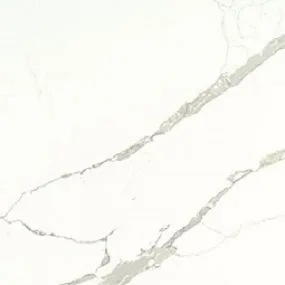
Calacatta Laza Quartz
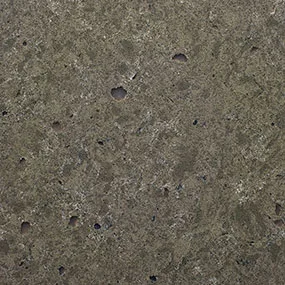
Babylon Gray Concrete Quartz
Quartzite: Natural Stone with a Spine
Despite the similar name, quartzite is a completely different material, a natural metamorphic stone, quarried in slabs, and one of the hardest surfaces you can put in a kitchen. It handles heat the way quartz can't and resists scratching better than marble ever will, while offering the kind of luminous, one-of-a-kind movement that made stones like Cristallo and Azul Macaubas famous. The trade-offs: it's porous enough to need periodic sealing, and dramatic slabs command premium prices. For clients who want natural stone that can actually take a punch, quartzite is the answer.

Cristallo Quartzite
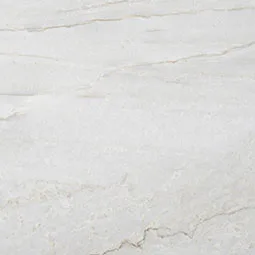
Denali Quartzite
Marble: Beauty That Asks Something of You
Nothing photographs like real marble, and nothing else has its cool touch and soft depth. It's also the most honest material on this list about how it will age: marble etches when acid touches it, stains if spills linger, and develops a patina no matter how careful you are. Some of our clients love that, a marble island that shows fifteen years of family life is its own kind of beautiful. Others lose sleep over the first lemon-juice mark. We often land on a both/and: marble like Bianco Dolomite in the baking zone or butler's pantry, with a harder-working surface on the main runs. (In the bath, where acids and knives aren't a factor, marble is far less demanding, see our marble master bath post.)

Bianco Dolomite Marble

Arabescato Carrara Marble
Granite: The Quiet Comeback
Granite spent a decade as the default and then fell out of fashion, unfairly, in our view. It remains heat-proof, scratch-resistant, and surprisingly affordable, and the granite of 2026 doesn't look like the speckled builder slabs of 2008. Honed black granite like Absolute Black reads as sophisticated soapstone-adjacent; clean whites like Andino White sit comfortably in modern kitchens. If your priorities are durability and value and you'd rather not think about your counters again for twenty years, granite deserves a fresh look.

Absolute Black Granite
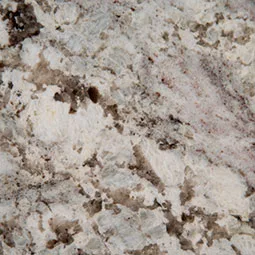
Andino White Granite
How We Help You Choose
The right answer usually comes from three questions: How do you actually cook and clean? How much maintenance will you genuinely do (not aspire to do)? And what is the countertop's job in the design, quiet foundation or the room's main event? From there, finish decisions like honed versus polished, edge profile, and whether to run the slab up the wall as a full-height backsplash complete the picture.
You can browse our full collection of quartz, quartzite, marble, and granite slabs on the Surfaces page. And because Olive + Baxter is a design + build firm, your material selection, template, fabrication coordination, and installation all run through one team. Contact us to find the surface your kitchen has been waiting for.