What a Designer Actually Does on a Shopping Day
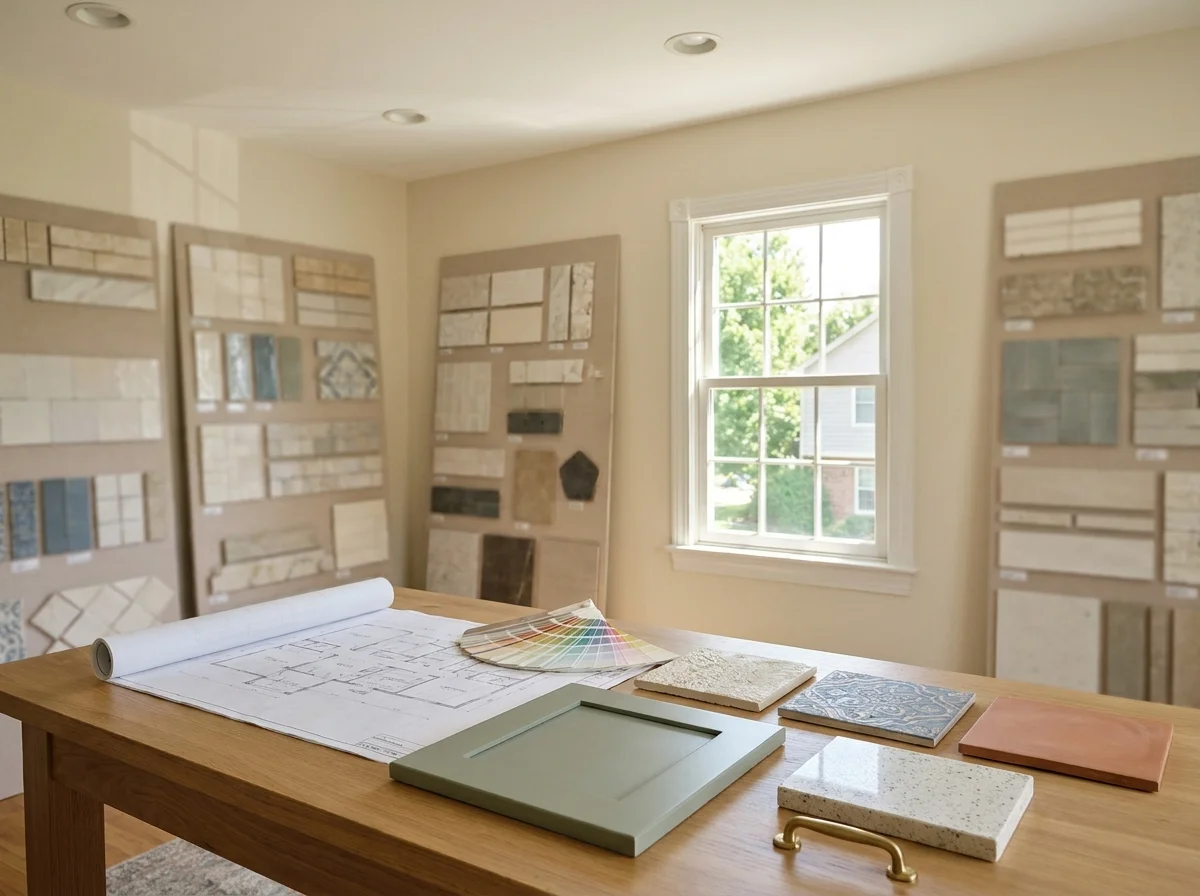
Here is how selections usually go without help. On a Saturday you visit a tile showroom and fall for a backsplash. Two weekends later you are at a stone yard choosing a countertop from memory, holding up a phone photo of the tile under warehouse lighting. A week after that you pick a faucet finish online. Each choice was reasonable on its own. Installed together, the tile is cooler than the counter, the counter is busier than you remembered, and the faucet matches neither. Nobody made a bad decision. The decisions were just never in the same room. A shopping day with a designer exists to fix exactly that.
Every finish on one table, judged against each other
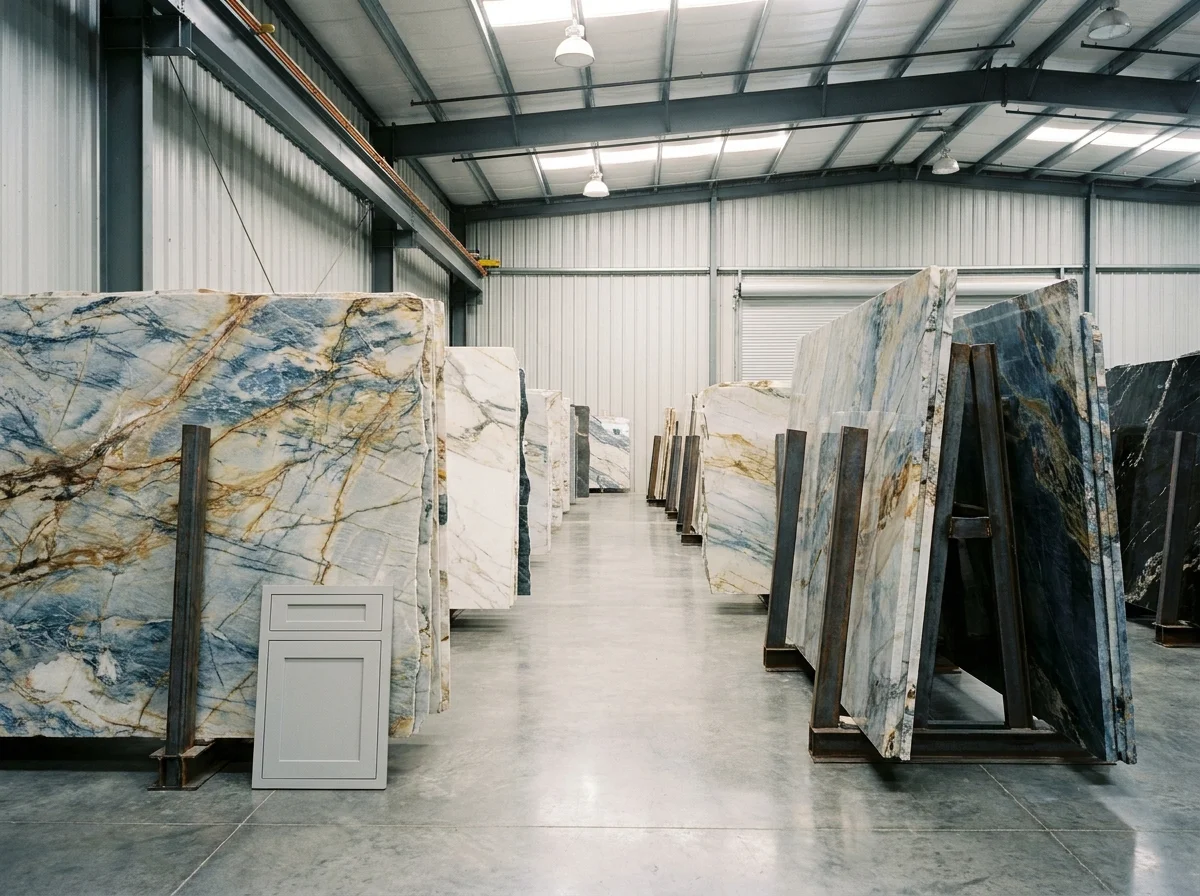
Bring the cabinet door to the slab, not a memory of it
Before the Trip: The Homework
The work starts well before anyone gets in a car. We begin with how you live and what the room has to do, then build a direction: a floor plan, a color palette, and a short list of what needs choosing. A kitchen might need a countertop, a backsplash, cabinet hardware, a faucet, and three light fixtures. A family room might need a sofa, two chairs, a rug, and tables.
Then we plan the route. There are more showrooms within an hour of Naperville than anyone could visit in a month, and most of them are wrong for any given project. We pick the two or three that suit yours and let them know what we are coming to see. Where we can, we narrow the field in advance, so you walk in to consider a handful of strong options instead of a wall of four hundred tiles.
What Is in the Bag
We arrive with the things that make a decision real: your floor plan with dimensions, the paint colors already chosen, a cabinet door sample in the actual finish, and samples of anything already selected. If the floor is staying, we bring a piece of it or a very good match. This is the single biggest difference between shopping with a designer and shopping alone. You are not asking whether you like a tile. You are setting it against your cabinet door and your countertop and asking whether the three of them belong together.
At the Showroom
Our job in the showroom is part editor, part translator. We pull the options worth your attention and set aside the rest. We carry samples to a window, because showroom lighting flatters everything and daylight tells the truth. We ask the questions that do not occur to most people until after installation. Does this tile come with a matching trim piece, or will the edge need a metal profile? Is this fixture finish available across the whole line, including the shower valve? Will this fabric hold up to a dog? Does this tile vary a little from piece to piece or a lot?
We also tell you where your budget is best spent. Sometimes a tile at twice the cost is twice as good. Sometimes the difference is only the name on the box. We will say which it is, and we will say it when you are leaning toward something that is beautiful in the hand but wrong for the room. The final call is always yours. Our role is to make sure it is an informed one.
At the Stone Yard
Natural stone has to be chosen in person, slab by slab. Two slabs with the same name can look like distant cousins, and a small sample cannot tell you where the dramatic veining falls. At the yard we look at full slabs, hold your cabinet door against them, and choose the specific pieces that will become your counters. We also think ahead to fabrication: where the seam will land, which part of the slab ends up on the island, and whether the pattern should run in a particular direction. Our countertop guide is good preparation for that visit.
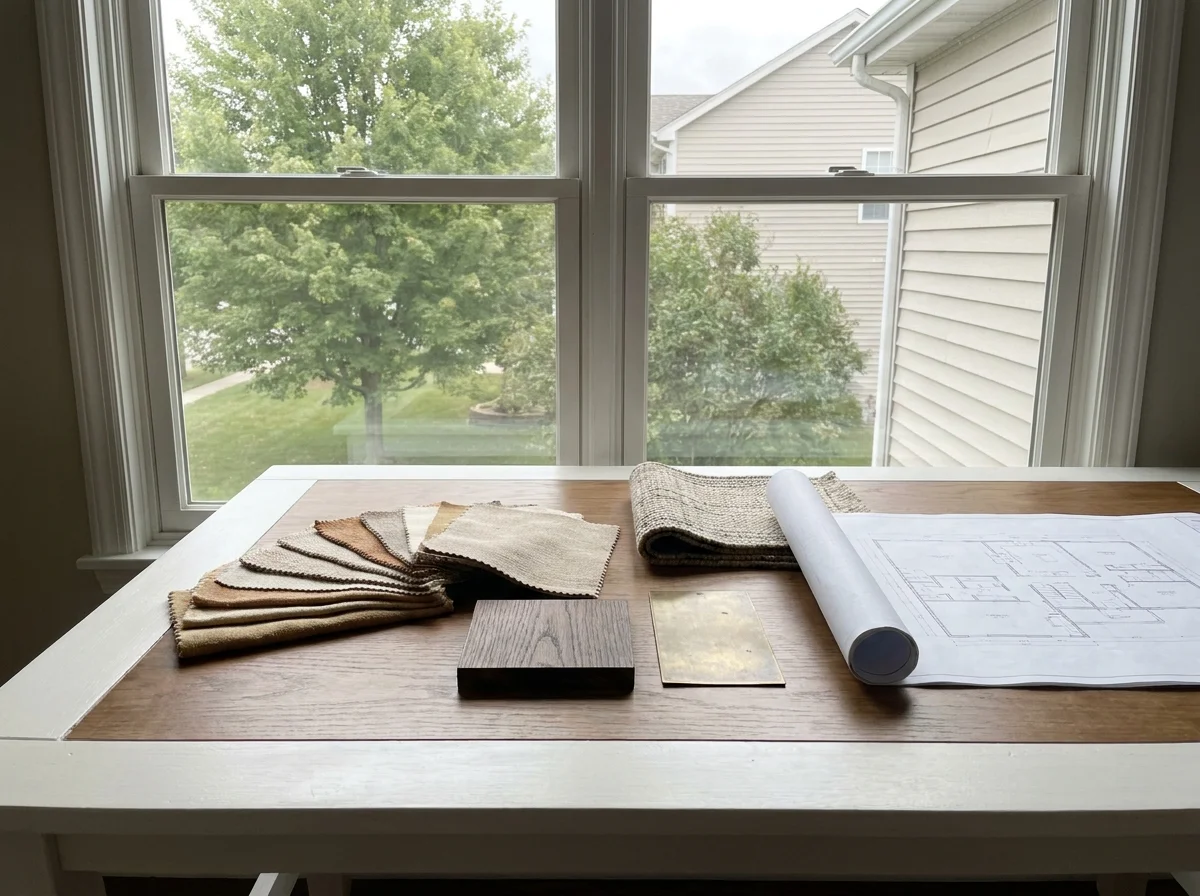
Fabric, wood, and metal get chosen as a set
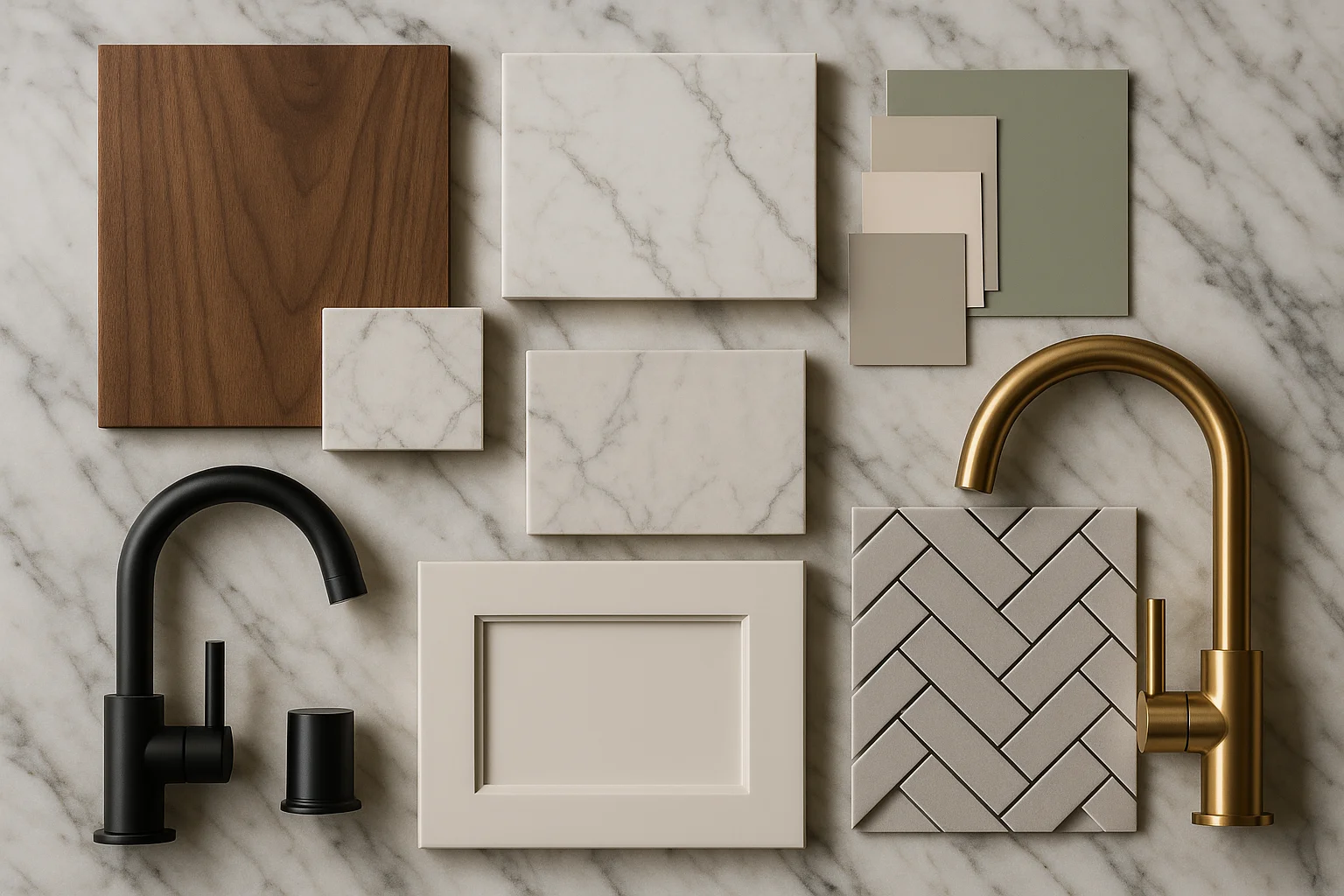
The finished board: one page the whole project builds from
Furniture Is a Different Kind of Shopping
For furniture, the trip is about sitting. Seat depth, cushion firmness, arm height, and how a chair supports your back cannot be judged from a photograph, and a sofa is too large a purchase to guess at. We take clients to showrooms, including trade showrooms that are not open to the public, to try the frames. Then we choose fabric, wood tone, and metal finish from samples so each piece is made for the room.
We check scale against the floor plan before anything is ordered: whether the sectional leaves a comfortable path to the patio door, whether the rug is big enough for the front legs of every seat, whether the chandelier clears the table by the right amount. Made-to-order furniture can take anywhere from weeks to months, so we lay out the timeline at the start and track the orders for you.
After the Trip
A shopping day ends with a record rather than a pile of loose samples. Every selection goes onto a single board and a written list: manufacturer, color, size, finish, and quantity. That list is what gets ordered, and it is what our installers build from, which prevents the classic mistake of the right tile arriving in the wrong size. If something is discontinued or backordered between the decision and the order, we find the substitute and show it to you against the rest of the board.
Who This Is For
Some clients come to us in the middle of a project, stuck on a single pairing, and need one focused trip. Others are starting an entire remodel and want every finish chosen together. Both work. You do not need a finished design to start, only a room and a willingness to make decisions with someone beside you who has made these decisions many times. When the big pieces are in place, the last layer is the accessories, which we covered in why a room can feel unfinished after the remodel is done.
Olive + Baxter is a design and build studio in Naperville with a showroom at 535 S Washington St, Suite 7. Our designers offer guided shopping for materials and finishes as well as full furniture curation. Explore our Home Shopping and Furniture Curation services or contact us to plan your first trip.