Humidity and Your Hardwood Floors: A Midwest Summer Survival Guide
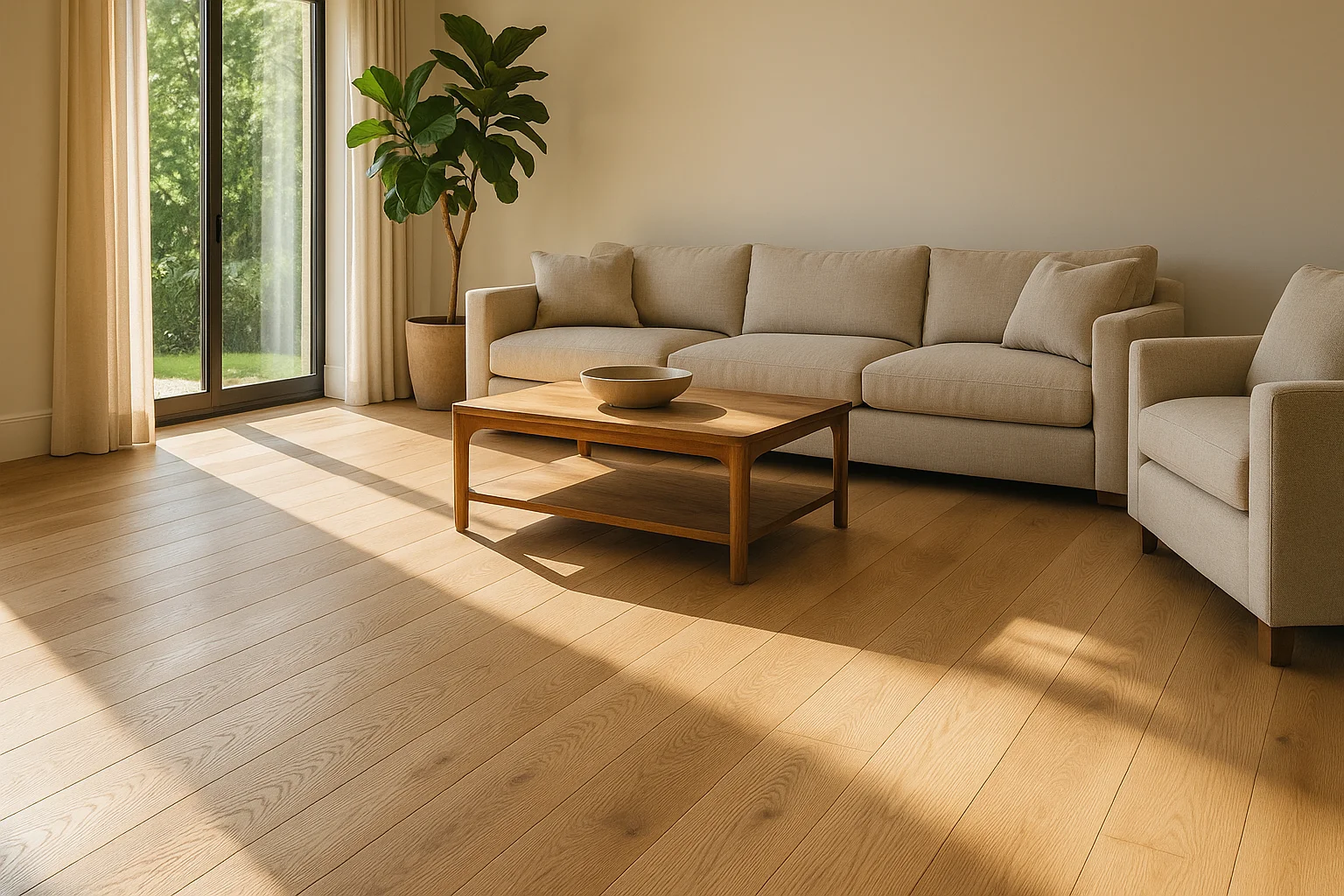
Wood is a natural material, and it never stops behaving like one. Every plank in your hardwood floor is still absorbing and releasing moisture with the seasons, swelling through humid Julys, shrinking through furnace-dry Januarys. In the Chicago western suburbs, where summer dew points regularly climb into the tropical range, that seasonal movement is a fact of life. Most of it is harmless. Some of it is a warning sign. Knowing the difference protects one of the biggest finish investments in your home.
Wood moves with the seasons, the goal is keeping it gentle
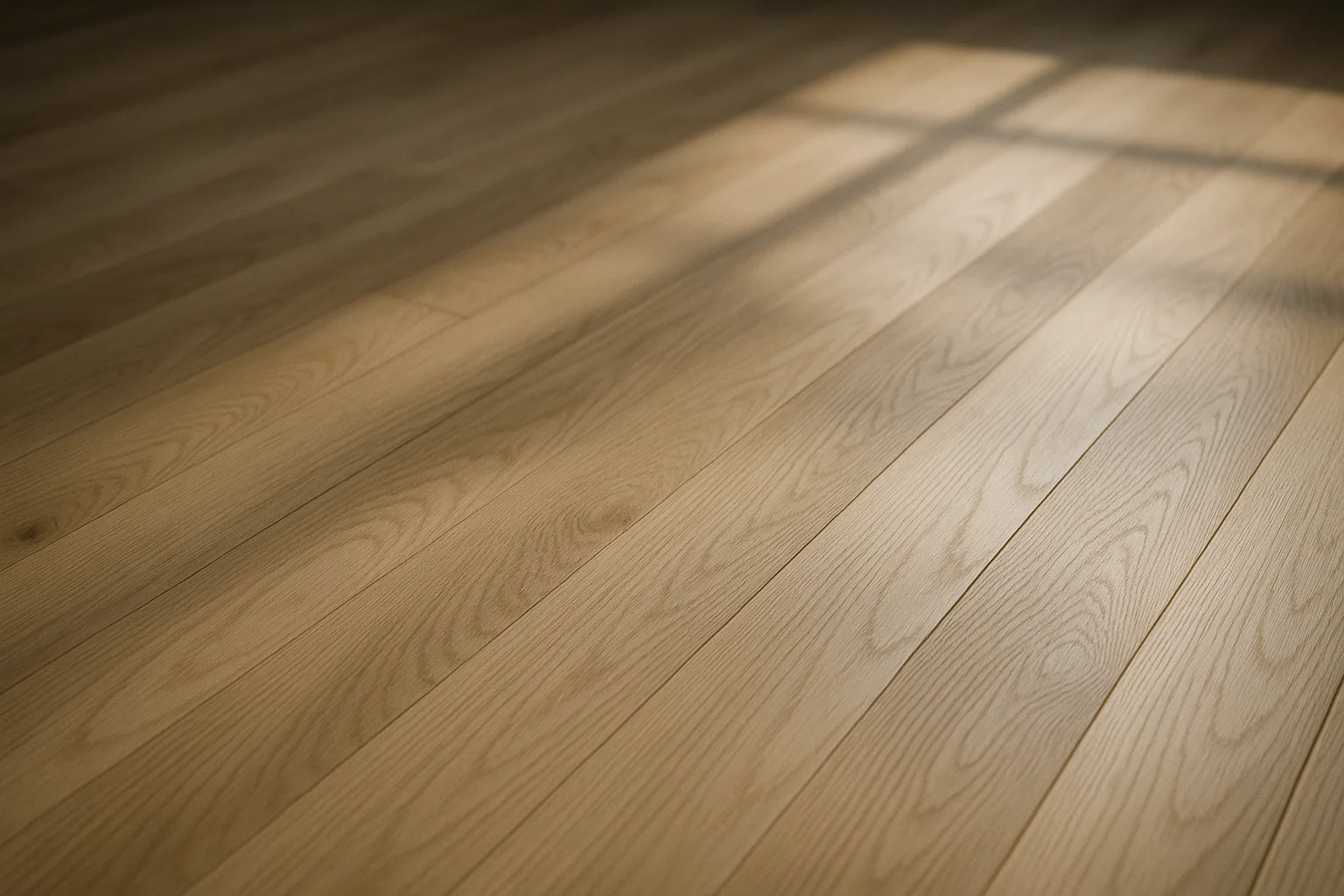
Hairline seasonal gaps are normal; cupped edges are not
What Summer Does to Wood
In humid months, planks absorb moisture from the air and expand across their width. Boards press against their neighbors, and in a healthy floor that pressure is absorbed invisibly. When indoor humidity runs high for weeks, though, the boards can run out of room: edges lift slightly while centers stay low, a washboard effect called cupping. In severe, moisture-driven cases boards can crown or even buckle free of the subfloor. Winter is the opposite story, dry furnace air shrinks the boards and opens thin gaps at the seams. A hairline gap in February that closes by July is a floor doing exactly what wood does.
The 35–55% Rule
Hardwood is happiest when indoor relative humidity stays between roughly 35 and 55 percent year-round. That single number does more for your floors than any product you can buy. In summer, air conditioning handles most of the dehumidifying, but only if it runs. Homes left closed up without AC during a vacation week in July can quietly climb into the 70 percent range, which is exactly when cupping starts. If parts of your home stay muggy (finished basements especially), a dedicated dehumidifier is cheap insurance. An inexpensive hygrometer on the main floor tells you the truth at a glance.
Summer Floor Care, Done Right
Day to day, summer care is simple: sweep or dust-mop grit before it scratches, wipe spills promptly, and when the floor needs washing, use a barely-damp microfiber mop with a cleaner made for polyurethane-finished wood. Never steam-mop hardwood, steam forces moisture into seams and finishes, and it voids most finish warranties. Mind the summer-specific hazards too: dripping swimsuits, sweating iced-tea glasses, wet dog paws, and planters that seep. Felt pads under furniture and washable rugs at exterior doors (with breathable, non-rubber backings) handle most of the rest.
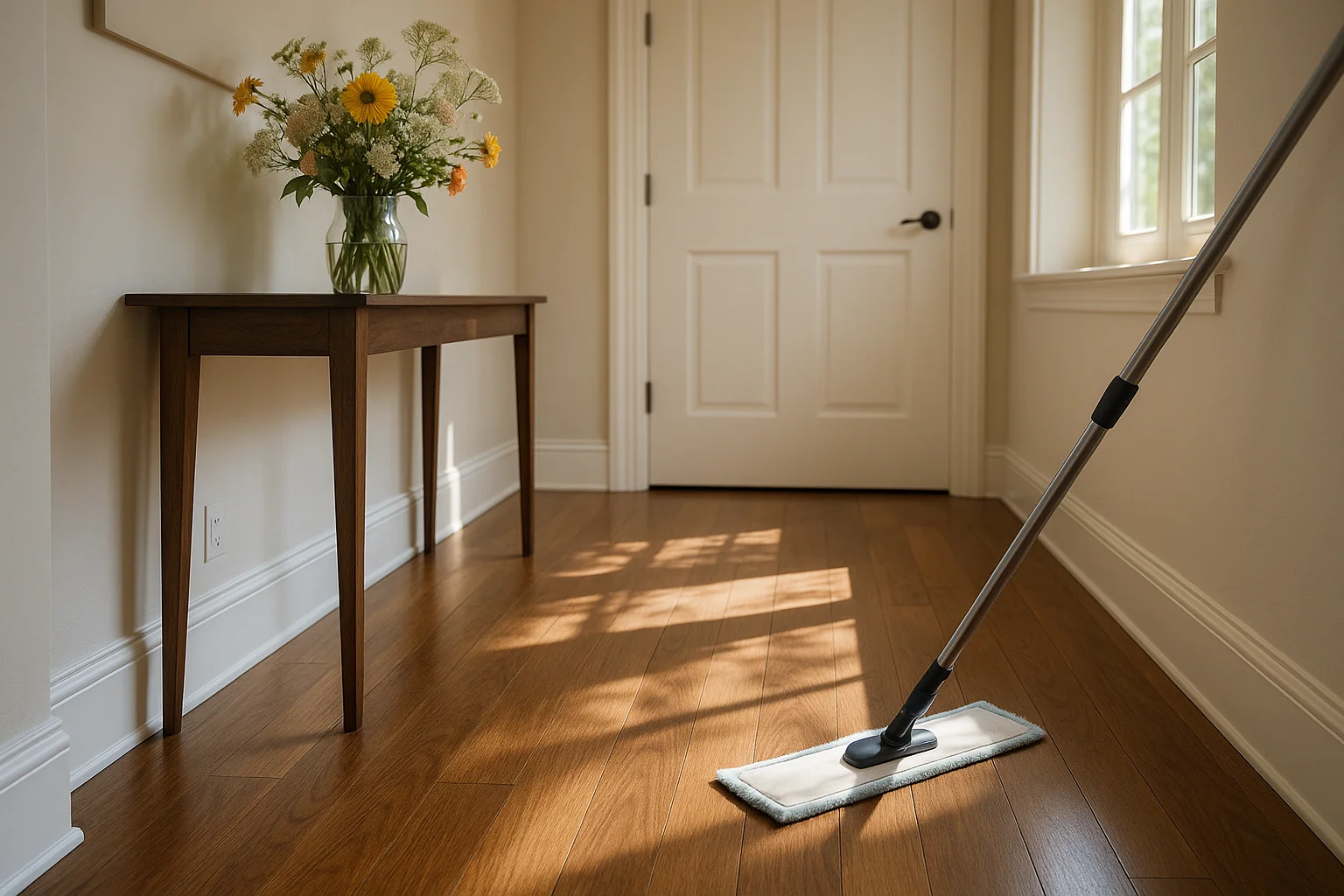
Dry methods first: grit does more damage than dirt
Keep humidity between 35 and 55 percent and wood stays calm
When to Call a Professional
Call when the floor tells you something has changed: cupping you can feel underfoot or see in raking light, gaps that persist through a humid summer, boards that crack or squeak in new places, finish that's gone cloudy or gray near doors and sinks. Caught early, most moisture issues resolve by fixing the humidity source and letting the wood re-acclimate, often followed by refinishing rather than replacement. Our guide to refinishing vs. replacing walks through how we make that call honestly.
Where Wood Shouldn't Fight the Battle
Some rooms are simply stacked against solid hardwood in a humid climate, below-grade basements, mudrooms, laundry rooms, and full baths. In those spaces we steer clients toward waterproof luxury vinyl plank in a tone matched to the surrounding hardwood, so the whole floor plan reads as one intentional palette. The full comparison is in our hardwood vs. LVP guide.
Olive + Baxter's flooring team installs, refinishes, and rescues hardwood floors throughout Naperville and the western suburbs, and because we're a full design + build firm, the same team can solve the humidity source, not just the symptom. If your floors are showing signs of a hard summer, explore our Hardwood Flooring services or contact us for an assessment.