Shutters, Blinds, or Shades? What Belongs on Which Window
Most homeowners use the three words interchangeably until they have to order something. Then it turns out that a shutter, a blind, and a shade are three different machines that happen to solve the same problem. One is a piece of millwork fixed to the window frame. One is a stack of slats that tilt. One is a single piece of fabric that rolls, folds, or stacks. They look different, they handle light differently, and they suit different rooms. Winter is when people notice their windows most, between the early dark, the bare trees, and the draft off the glass, so this is a good moment to sort out which is which.
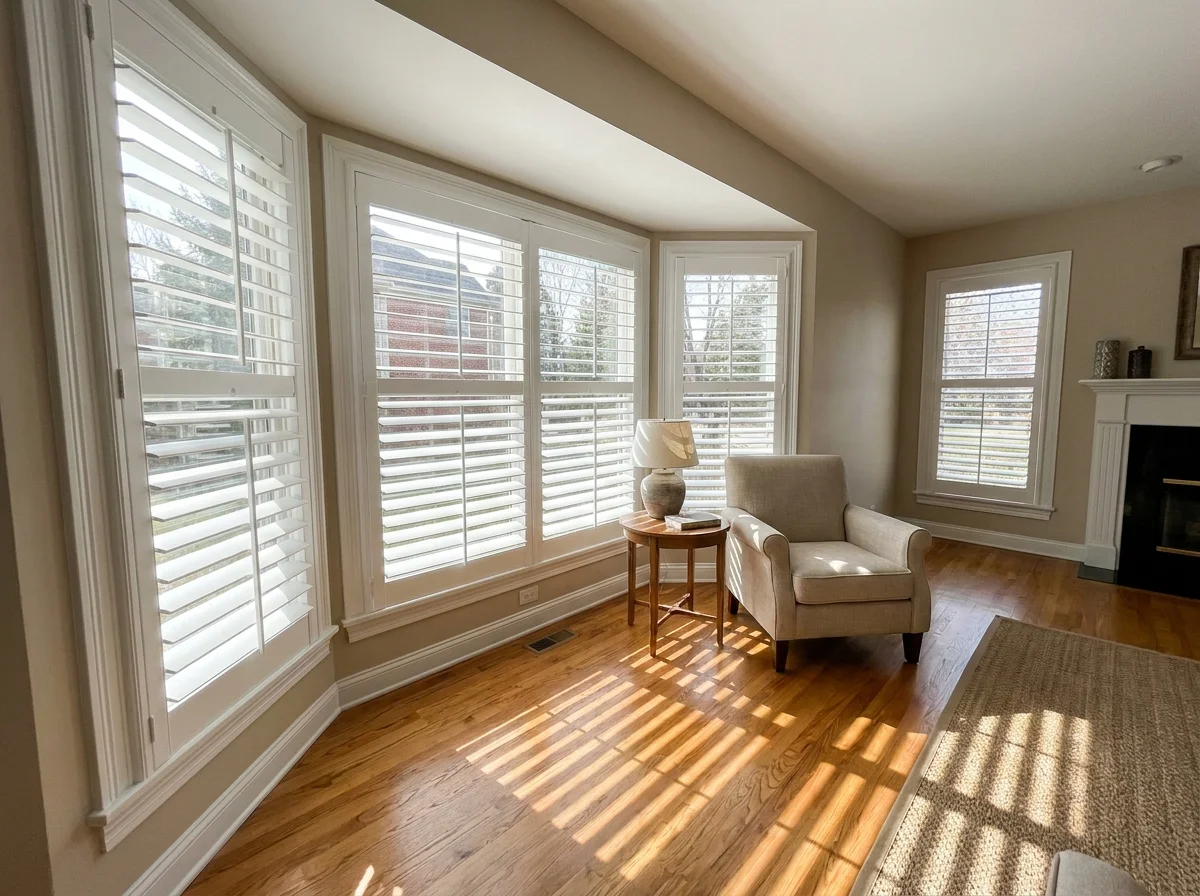
Plantation shutters: part window treatment, part trim
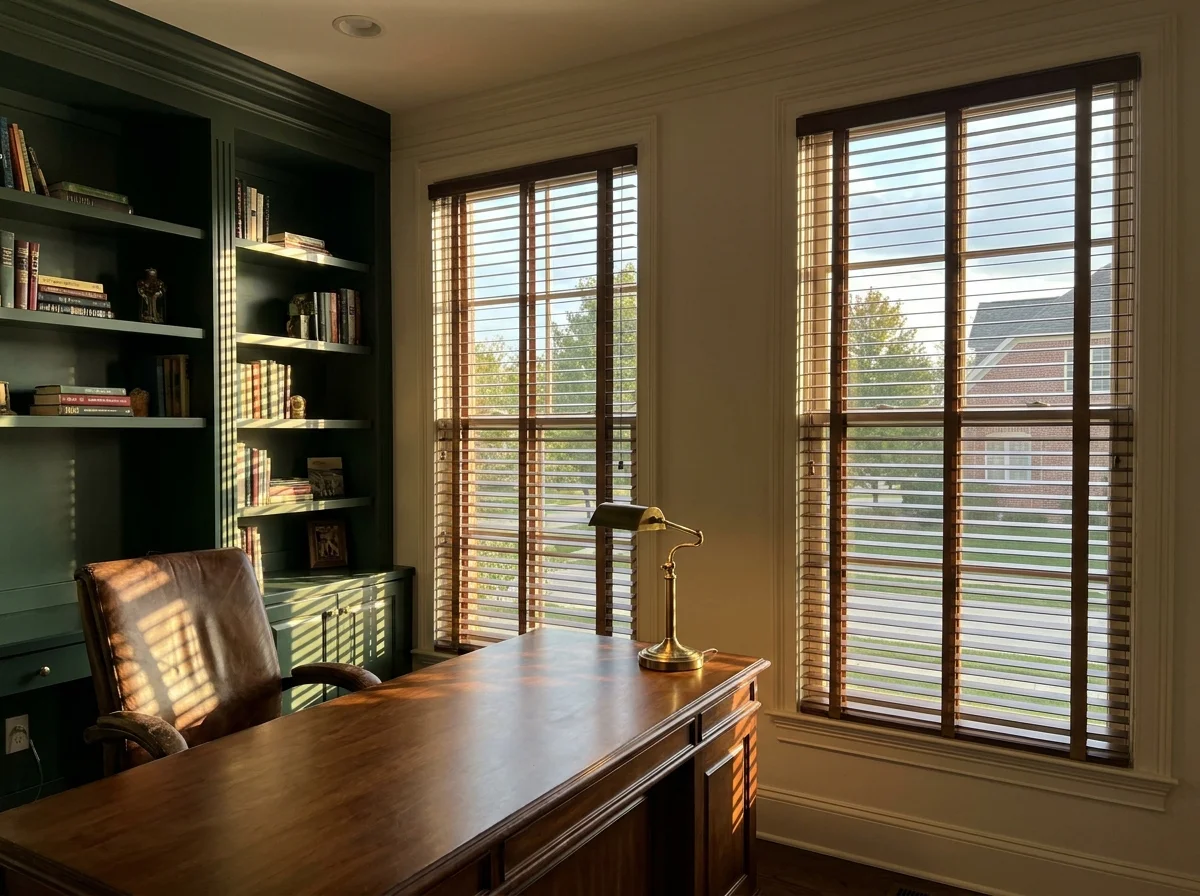
Wood blinds suit a study, where you adjust the light all day
Shutters: Architecture You Can Adjust
An interior shutter is a hinged panel with louvers, built to the exact dimensions of the window and mounted in a frame. Plantation shutters have wide louvers, several inches across, which give a clean look and a generous view when they are open. Traditional shutters have narrower louvers and a more detailed, classic character. Either way, a shutter stays on the window whether it is open or closed, so it reads as part of the house rather than something added to it.
What shutters do best is control. Tilting the louvers lets you direct light up toward the ceiling, block the view in from the street while keeping the view out, or close the panel entirely. Because a shutter is a solid panel that fits tightly to the frame, it also adds a layer between the room and the glass, which helps on the coldest and hottest days. They are durable, they wipe clean, and they have no cords at all.
The trade-offs are real. A shutter frame and its rails cover some of the glass even when the louvers are wide open, so a small window loses a noticeable share of its light. Panels need room to swing if you want to open them fully. And shutters are a commitment: they are made to order for each opening, they take time to fabricate, and they are not something you change with the seasons. Wood gives the finest finish and is lighter on wide panels. Composite handles moisture and strong sun better, which makes it our choice for bathrooms and kitchens.
Blinds: Slats, Simple and Precise
A blind is a set of horizontal slats on a ladder of cords or tapes. Tilt them to adjust the light, or raise the whole stack to clear the window. Blinds come in real wood, faux wood, composite, and aluminum, in several slat widths.
Blinds offer much of the same light control as shutters in a lighter, less architectural form, and they disappear almost completely when raised. Wood blinds bring warmth to an office, a library, or a dining room. Faux wood resists warping from heat and humidity, so it holds up over a kitchen sink or in a bathroom. The limits: slats collect dust, some light always passes between them and around the edges, and they do little for insulation. If a bedroom needs to be truly dark, blinds alone will not get there.
Shades: Fabric, and the Widest Range
A shade is one continuous piece of material, and that simple definition covers an enormous range. Roller shades are the most minimal. Roman shades fold into soft pleats and bring pattern and texture, as the breakfast nook below shows. Cellular shades trap air in honeycomb pockets and are the strongest insulators of the group. Woven woods add natural texture. Each can be made sheer, light-filtering, room-darkening, or blackout, depending on the fabric and lining.
Shades are either up or down, with no tilting, so the control comes from fabric choice and from features like top-down bottom-up operation, which lets daylight in at the top of the window while the lower half stays covered. They are the softest of the three options and the easiest to layer with drapery, a combination we covered in layered window treatments. Our summer post on keeping a house cool covers the energy side; the same cellular shade that blocks August heat holds warmth in January.

Roman shades bring pattern to a breakfast nook
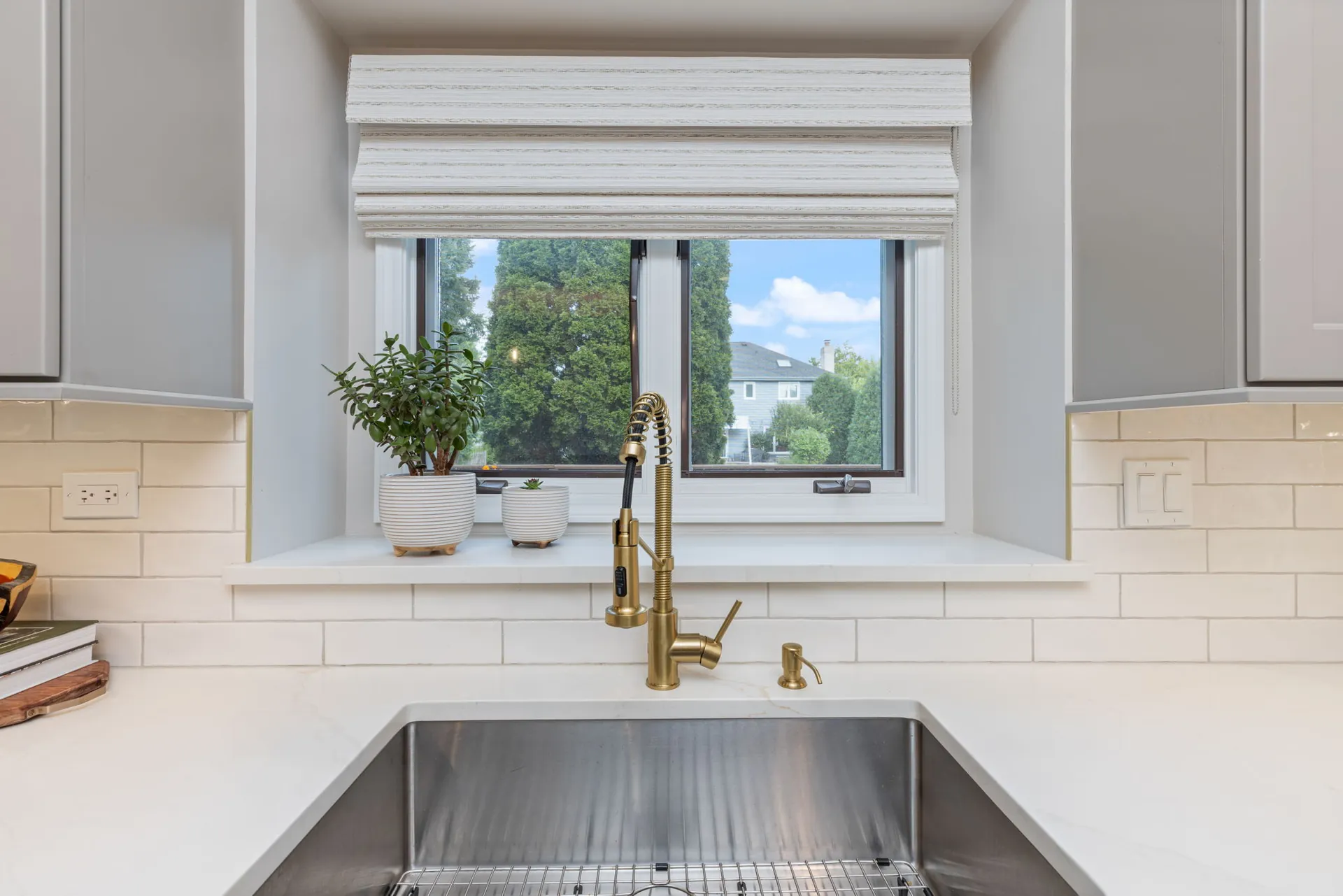
A woven shade softens the one window in a wall of cabinetry
Room by Room: What We Would Choose
Street-facing living and dining rooms. Shutters. They give privacy from the sidewalk without closing off the room, they look as good from outside as inside, and they give the front of the house a consistent face.
Bedrooms. Shades, usually cellular or lined Roman, with a blackout option for anyone who sleeps past sunrise. Add drapery panels at the sides to close the light gaps and soften the room.
Kitchens. A Roman or woven shade over the sink for softness, or faux wood blinds or composite shutters where splashes and steam are a concern. Keep fabric away from the range.
Bathrooms. Composite shutters or a moisture-tolerant shade with top-down operation, so you get daylight and privacy at once.
Home offices. Blinds or shutters. The sun moves across a screen all day, and tilting a louver is the fastest way to deal with glare.
Large sliding doors and tall windows. Roller or cellular shades, often motorized, or drapery on a track. Hinged shutters on a door that is used every day tend to be in the way.
Arched and angled windows. Shutters, because they can be built to the shape.
You Do Not Have to Pick One for the Whole House
The best-dressed houses mix them: shutters across the front, shades in the bedrooms, a Roman shade in the kitchen. What keeps a mix from looking accidental is consistency in color and mounting. Keep whites matched to the trim, keep the treatments facing the street in one family, and decide room by room after that. In homes with young children, we specify cordless or motorized operation throughout. Our guide to choosing window treatments for every room covers the wider decision.
Olive + Baxter is a design and build studio in Naperville with a showroom at 535 S Washington St, Suite 7. Our designers measure, specify, and install custom shutters, blinds, shades, and drapery, and we bring samples to your windows so you can see them in your own light. Explore our Window Treatment services or contact us to schedule a consultation.