Your Home Office Was a Pandemic Compromise. It's Time to Design It on Purpose.
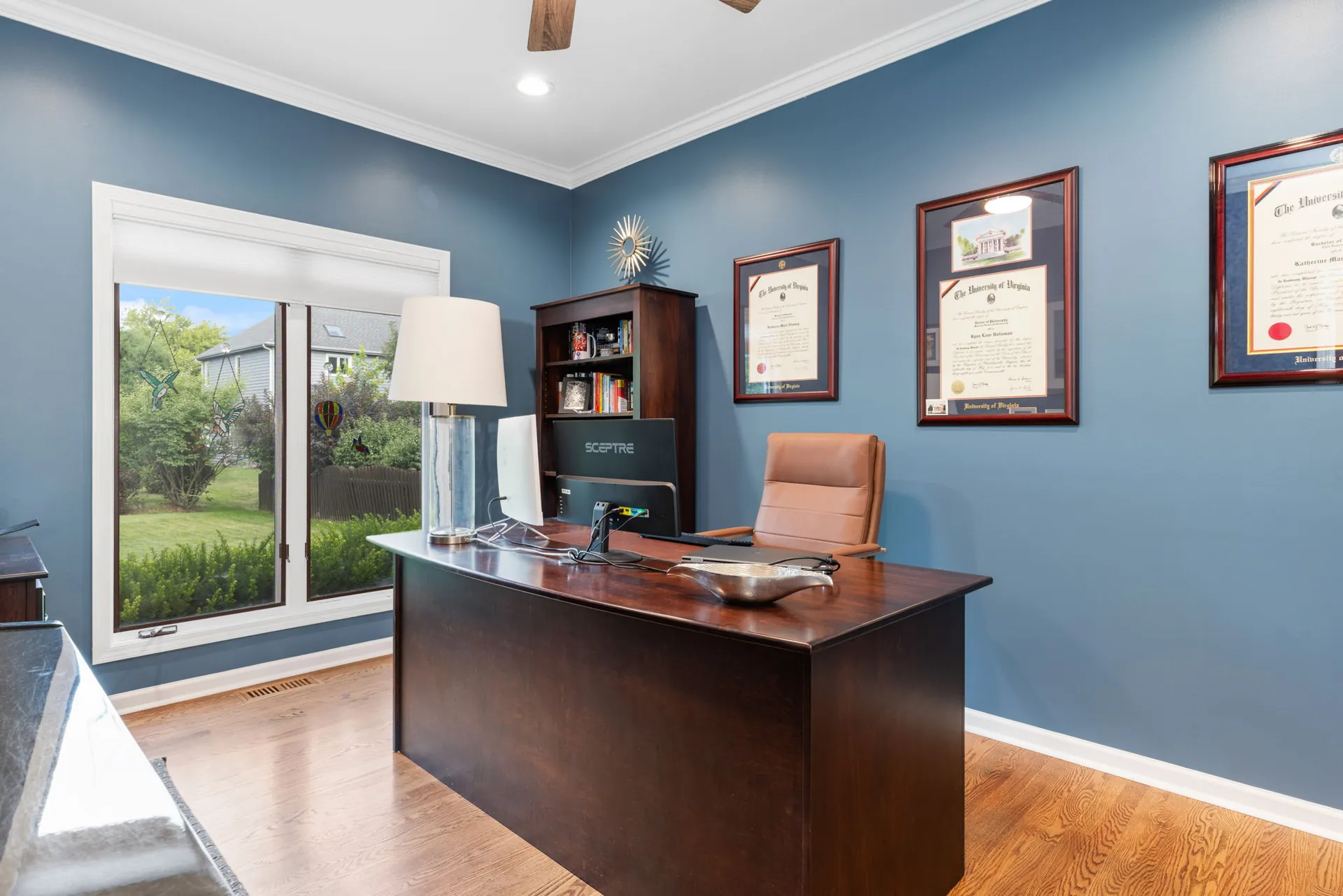
Almost every home office we are asked to fix has the same origin story. In 2020 somebody moved a desk into the spare bedroom, promised it was temporary, and then worked there for six years. The bed is still in it. The lighting is a single overhead fixture. The wall behind the video call is a beige rental-grade nothing, and the chair came from a big-box store on a Tuesday afternoon in a hurry.
Late July and August are when this gets fixed, because the fall calendar makes it urgent, school starts, travel ends, and the room has to work again. Here is how we approach it.
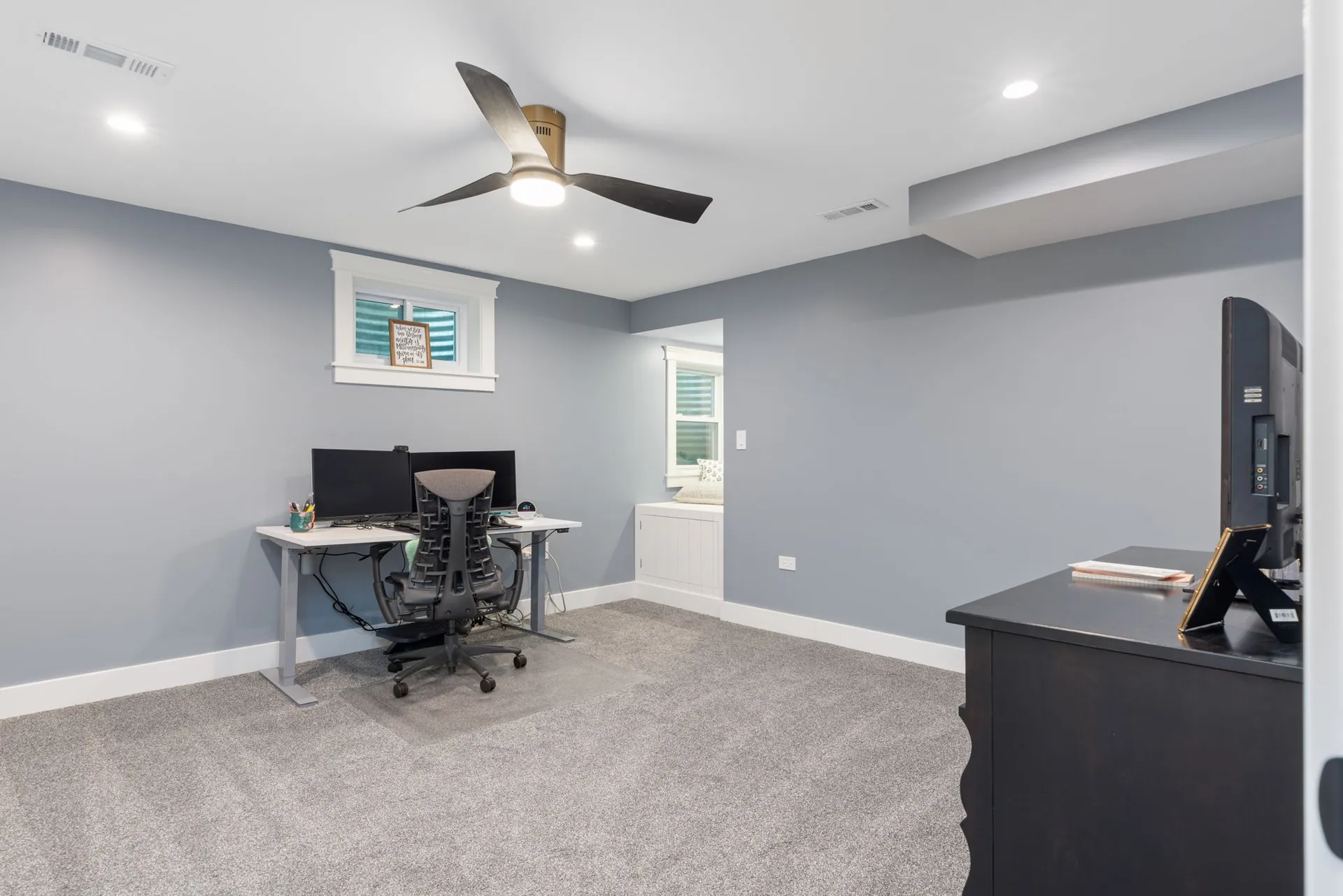
A lower-level office with a built-in reading nook
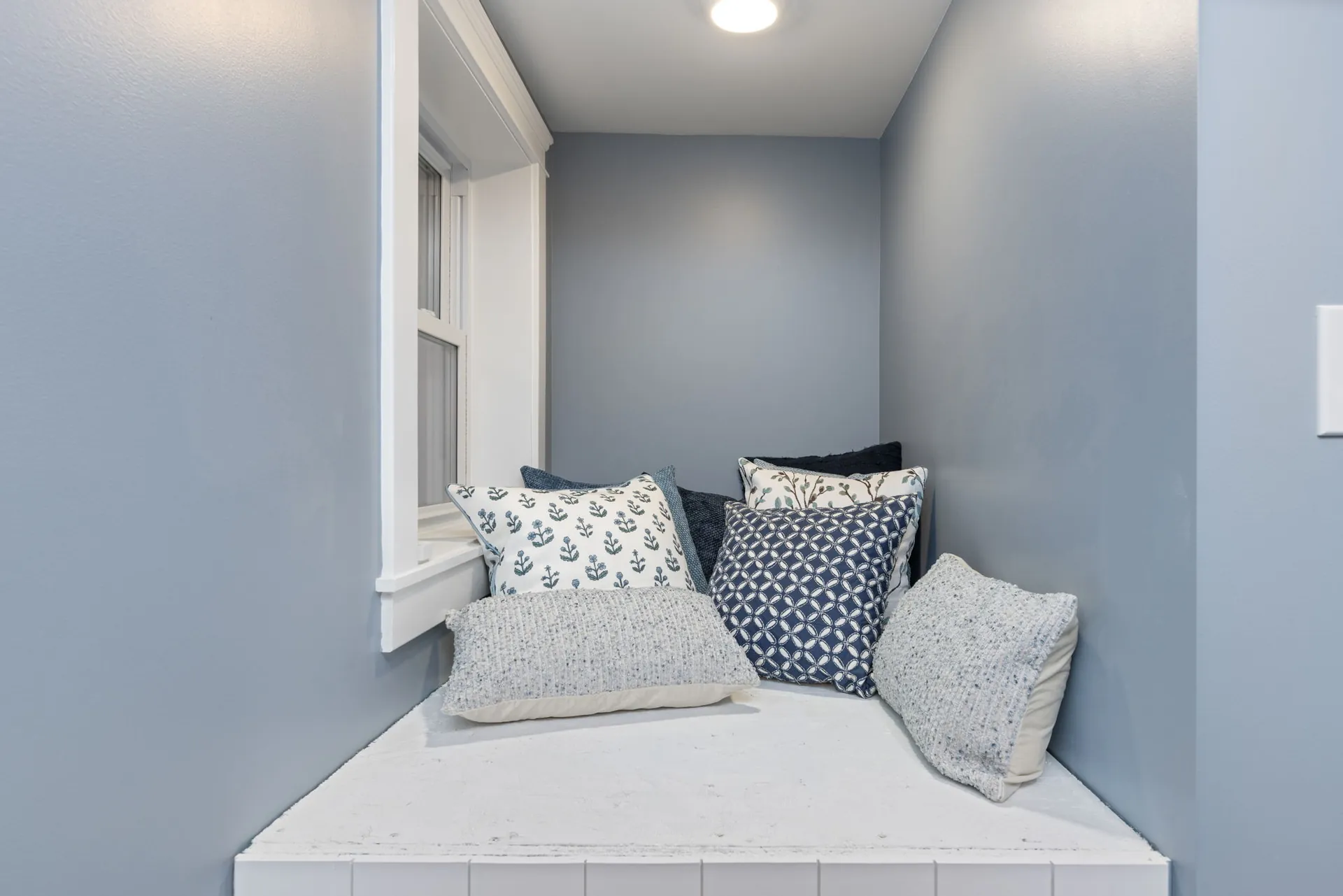
The second seat matters more than people expect
Pick the Right Room, Not the Spare One
The spare bedroom is chosen because it is available, not because it is suitable. Before defaulting to it, ask three questions. Which room is quietest during your actual working hours, not at 9pm when you toured it? Which room has a door you can close, and does that door face a hallway with traffic? And which room's windows put daylight beside you rather than behind you or straight into your eyes?
Very often the honest answer is the lower level. Basements are quiet, cool, naturally separated from household noise, and, with the right lighting and paint, entirely pleasant to work in. They are also, square foot for square foot, the least expensive space in the house to finish. A dedicated lower-level office frequently beats the spare bedroom on every metric except intuition.
Color Does the Focus Work
A home office is one of the few rooms where a deeper wall color is functionally useful, not just attractive. Saturated blues and greens reduce the glare bouncing off pale walls into your eyes, they photograph far better on video calls than white, and they create a psychological boundary, you are somewhere different from the rest of the house. A mid-tone blue with white trim and warm wood furniture is close to a can't-miss combination, and it reads as serious without reading as corporate.
Whatever you choose, put it behind you as seen by the camera, not in front of you. That is the wall your colleagues stare at for hours.
Built-Ins Beat Furniture
Freestanding office furniture is sized for a showroom, not for your room. It leaves dead space at the ends, floats awkwardly off the wall, and never quite handles the cables. Built-in cabinetry solves all three: a run of base cabinets with a solid work surface, uppers or open shelving above, and a designed path for power and data. Grommets and an outlet inside the cabinet mean the printer, the dock, and the charging cables live out of sight instead of in a nest behind your feet.
Built-ins also let you steal space that furniture cannot use, a shallow twelve-inch cabinet run along a wall that could never accommodate a real desk, or a window seat with drawers underneath in the bay that would otherwise be wasted.
The Second Seat
Every good home office has somewhere to sit that is not the desk chair. A reading chair, a window seat, a small sofa. It sounds like a luxury and it is actually a productivity feature, it gives you a place to take a phone call without a screen, to read something long-form, or to simply not be at the desk while still being at work. In a lower-level office we built a window seat into the one spot with natural light, with storage underneath. It gets used constantly.
Light It Like a Room, Not an Office
One ceiling fixture is not lighting. You want three layers: ambient light overhead on a dimmer, task light at the work surface that does not cast your own shadow onto your keyboard, and something warm at eye level, a lamp, a sconce, that keeps your face lit from the front on video calls. Keep every bulb at the same color temperature, 2700K to 3000K, and put as much of it as possible on dimmers.
Then handle the glare. A window directly behind your monitor will blow out every video call you take. Solar shades or a light-filtering roller solve it without making the room dark; our room-by-room window treatment guide covers the opacity choices, and the summer heat post is worth reading if your office faces west and becomes unusable after 3pm.
Olive + Baxter designs home offices as full rooms, cabinetry, paint, lighting, and window treatments handled by one team out of our Naperville studio. Explore our Interior Design services or contact us about the room you have been apologizing for on calls.