The Fixture Is the Jewelry: Choosing a Chandelier for Every Room
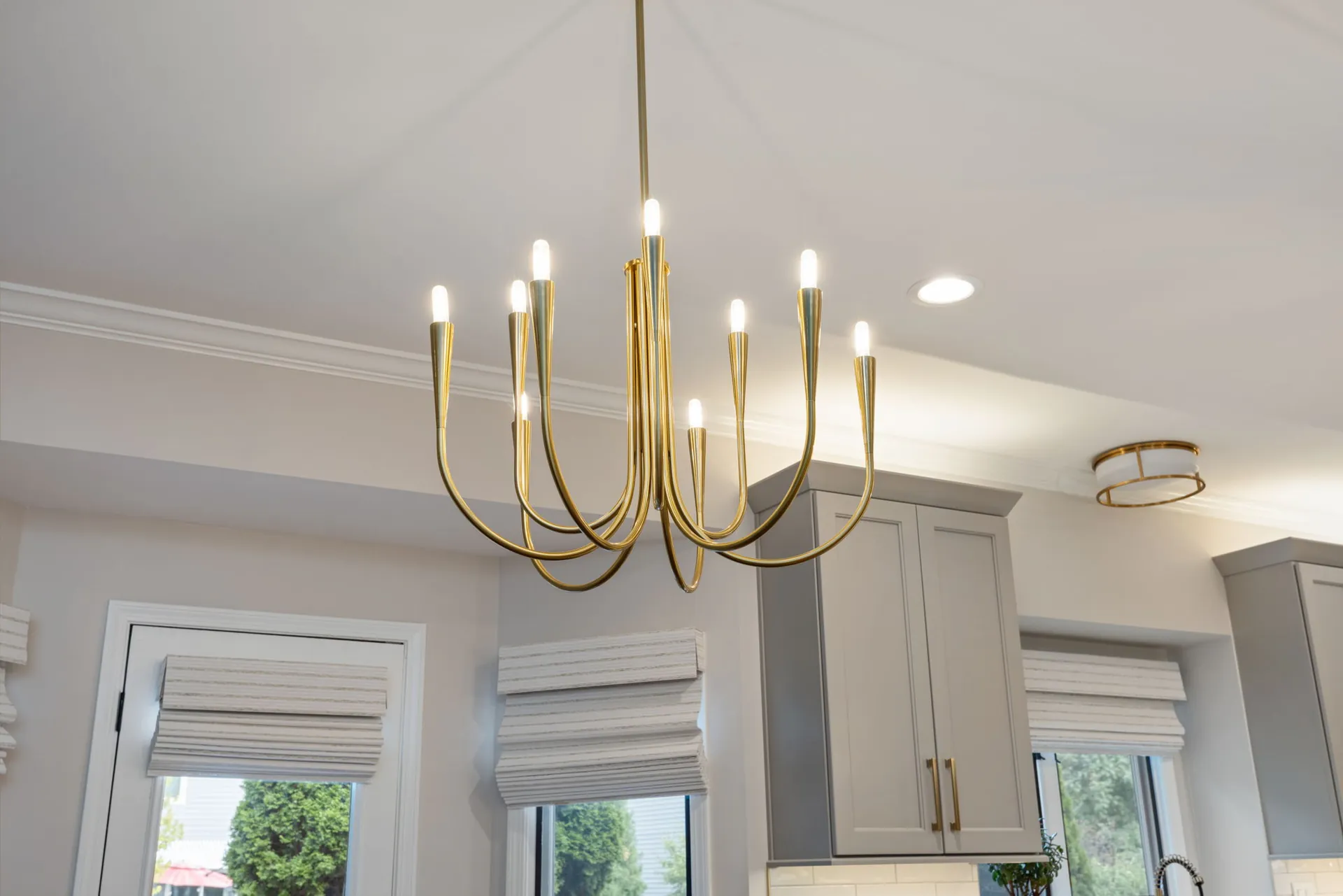
A chandelier is the piece of a room people photograph and the piece they get wrong most often. Not because they choose an ugly fixture, the fixtures are almost always lovely, but because they choose one that is six inches too small, hung eight inches too high, in a finish that fights the hardware fifteen feet away. Lighting is jewelry, and jewelry has to be scaled and matched. Here is how we make those calls room by room.
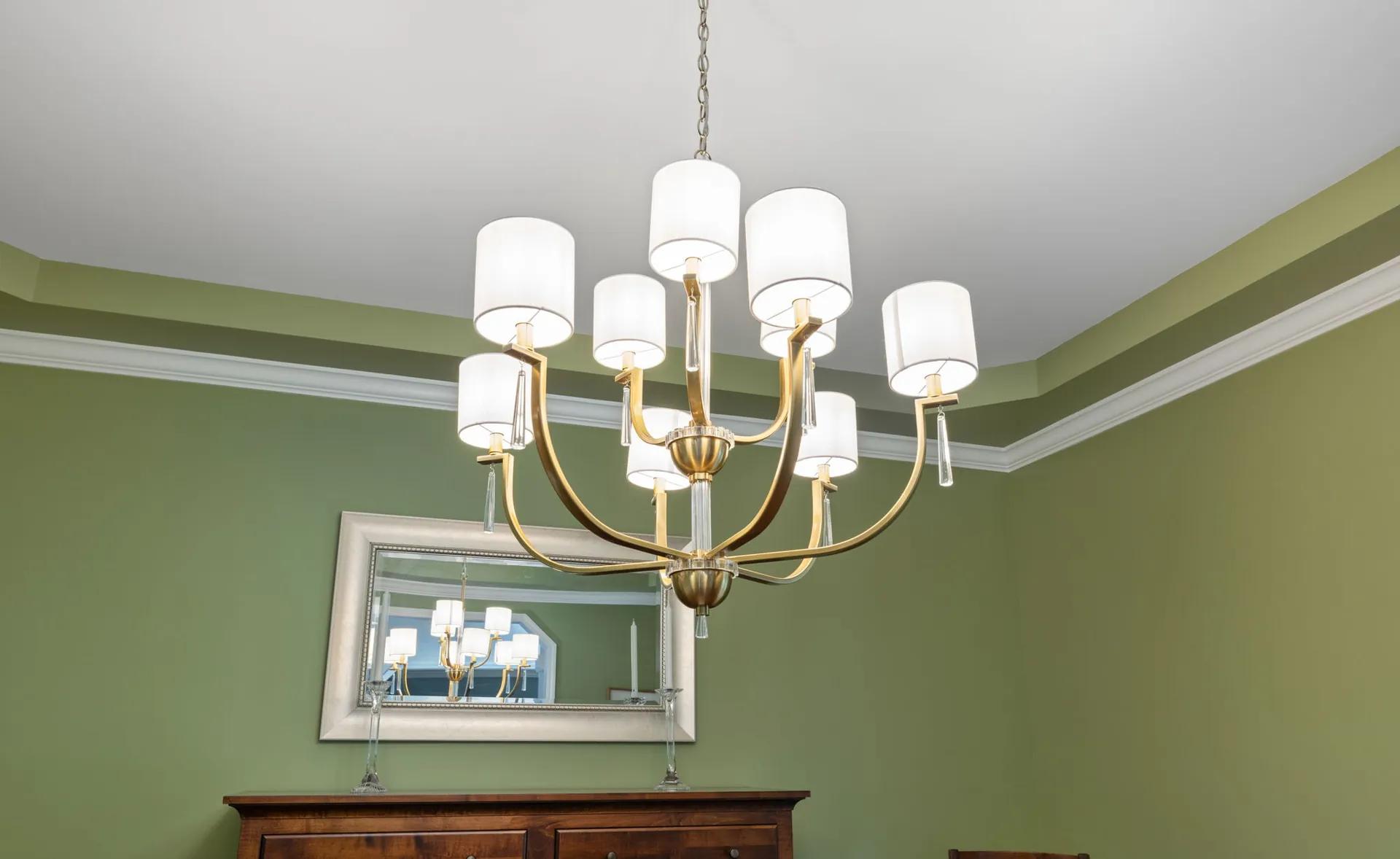
Two tiers of shades read as one mass over a table
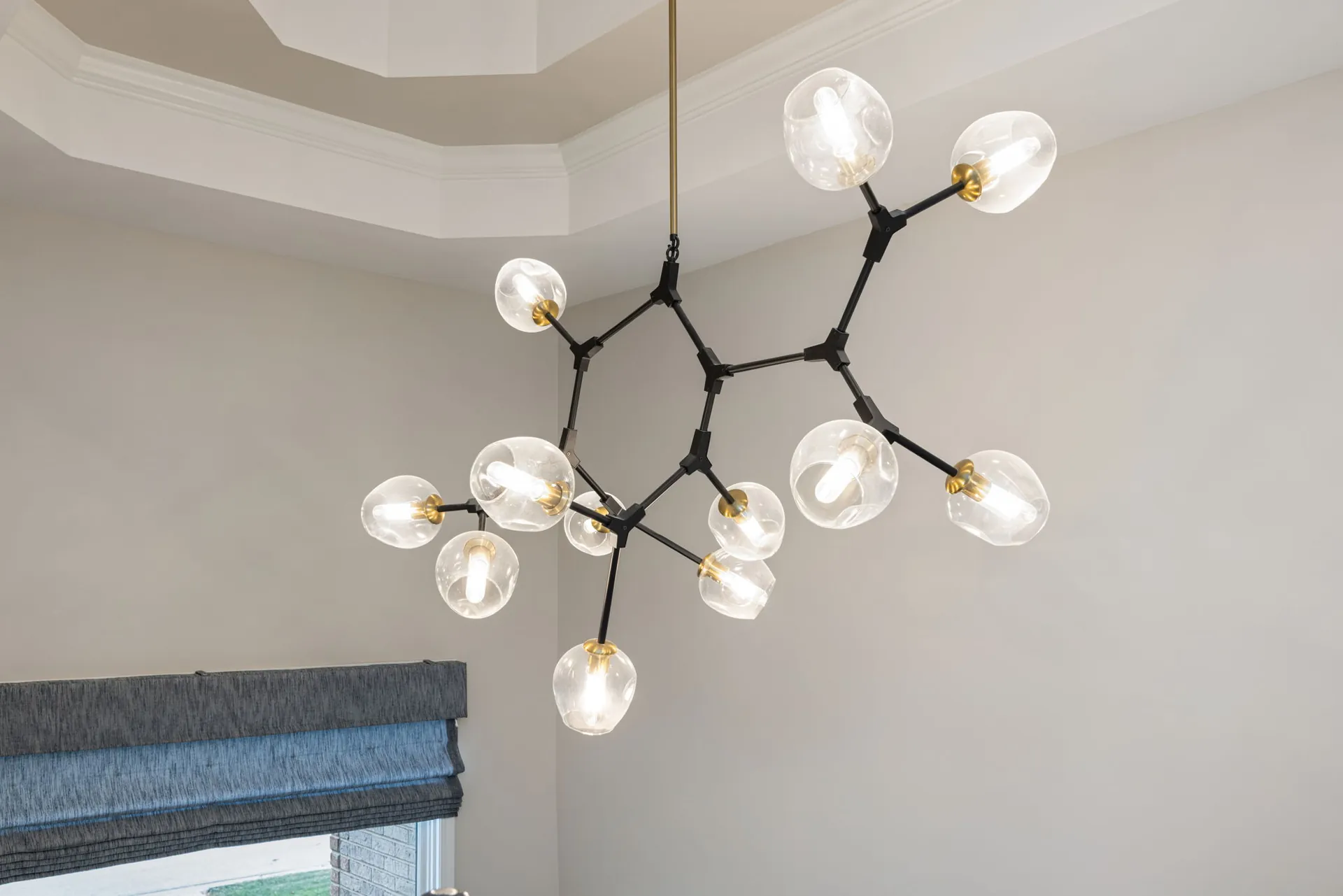
Sculptural and open, for a ceiling worth seeing
Size It Before You Style It
The most useful rule in lighting: add the room's length and width in feet, and the sum in inches is roughly your fixture diameter. A 12 by 14 foot dining room wants something in the neighborhood of 26 inches wide. Over a table, ignore the room and use the table instead, the fixture should be about half to two-thirds the table's width, and never wider than the table minus twelve inches on each side, or people will hit it standing up.
Almost every fixture that looks wrong in a finished room is undersized. Showrooms are enormous and ceilings there are twenty feet; a chandelier that felt bold under those conditions arrives looking like a pendant. When in doubt, go one size up.
Height Is Everything
Over a dining table, the bottom of the fixture belongs 30 to 34 inches above the tabletop, closer to 30 for an eight-foot ceiling, 34 for taller. In an open room or foyer with no furniture beneath it, maintain at least seven feet of clearance to the floor. In a two-story foyer, hang the fixture so it is centered in the window when viewed from outside, and so its lowest point is no lower than the second-floor ceiling line.
This is the single most common correction we make on site. A fixture hung too high stops belonging to the table and starts belonging to the ceiling, and the room loses its center of gravity.
Dining Rooms Want Mass
A dining chandelier's job is to define a zone and flatter faces. That argues for fixtures with some visual weight and, ideally, shades or diffusers that soften the light rather than throwing it straight down. Shaded tiers in a warm brass do this beautifully, and they pair naturally with a painted tray ceiling, which gives the fixture a recessed field to sit against instead of a flat plane. Our post on tray ceilings and statement chandeliers goes deeper on that relationship.
Foyers Want Sculpture
Entries are seen from below, from the stairs, and from outside at night. That is an argument for open, three-dimensional fixtures that read well from every angle, branching arms, clear glass globes, mixed black and brass. Because there is no table to relate to, foyer fixtures can be more adventurous. They also benefit from being visible in silhouette, which is why solid drum shades often disappoint in an entry while an open armature does not.
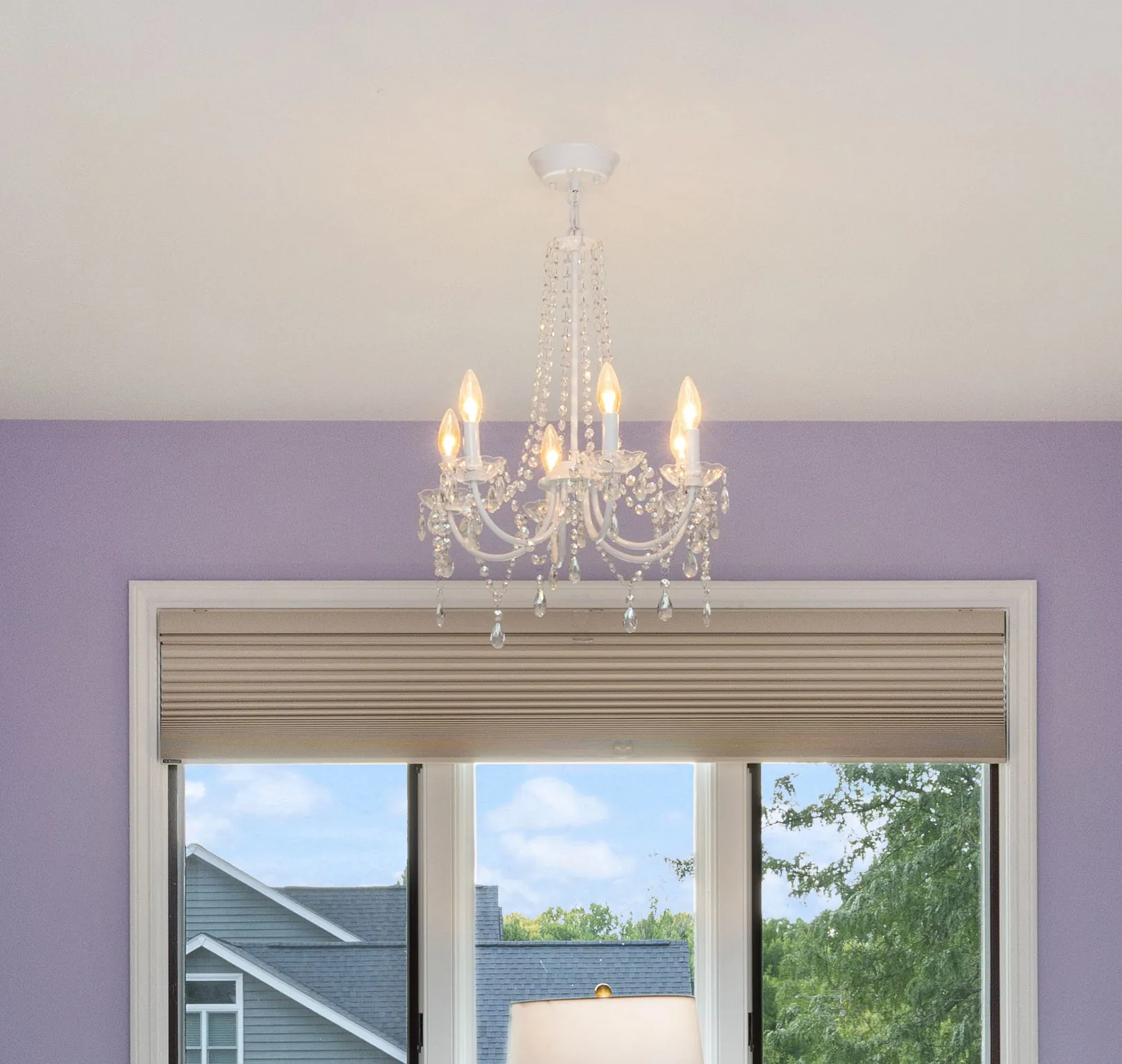
Crystal earns its place in a child's room
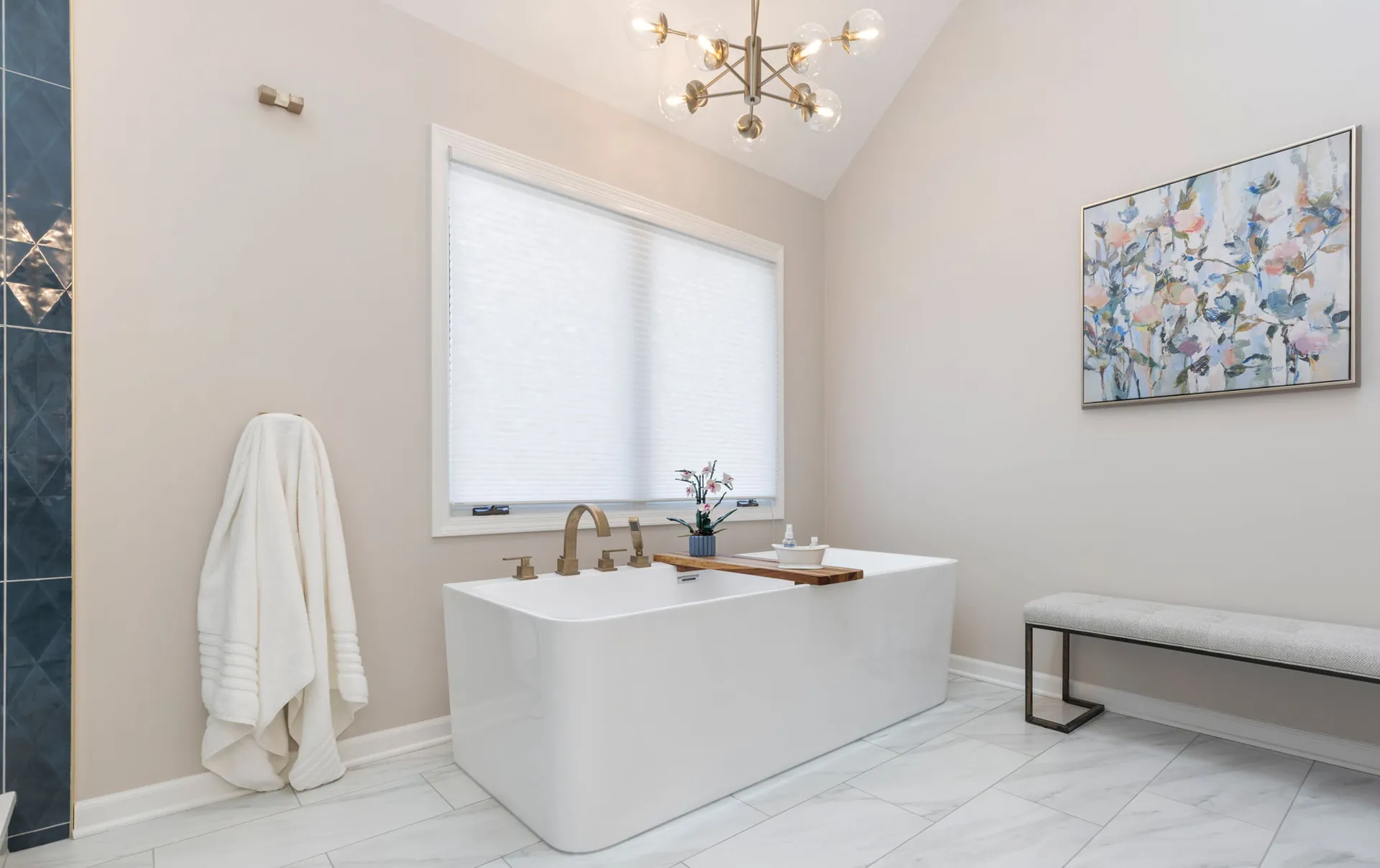
Over a tub, check the damp-rating first
Bedrooms and Bathrooms Want Restraint, With One Exception
In a primary bedroom, the chandelier competes with a large upholstered headboard and whatever is happening on the walls. If the wall behind the bed is doing the work, keep the fixture simple. If the room is quiet, let the fixture speak. Children's rooms are the happy exception to every restraint rule, a small crystal chandelier in a lavender bedroom is genuinely delightful and costs less than most people assume.
Bathrooms come with a code requirement that trips people up: any fixture over or near a tub must be damp- or wet-rated and, in most jurisdictions, hung at least eight feet above the rim or three feet horizontally from it. A globe chandelier over a freestanding tub is one of the most requested moments in a primary bath, and it is entirely achievable, it just needs to be the right listed fixture, planned before the electrical rough-in.
Mixing Metals Is Fine. Mixing Temperatures Is Not.
You can absolutely run brass lighting against nickel plumbing or black hardware; that mix reads as considered rather than accidental as long as each metal appears at least twice in the room. What you cannot mix is color temperature. Nothing makes a beautifully lit room look cheap faster than a 2700K chandelier surrounded by 4000K recessed cans. Specify one temperature, we use 2700K almost everywhere in living spaces, and put every fixture in the room on a dimmer. A chandelier without a dimmer is a chandelier operating at exactly one of its many good settings.
Olive + Baxter selects and specifies lighting as part of our interior design work, coordinating fixtures with cabinetry hardware, plumbing finishes, and ceiling detail before a single box is set. Explore our Interior Design services or get in touch to talk through your rooms.